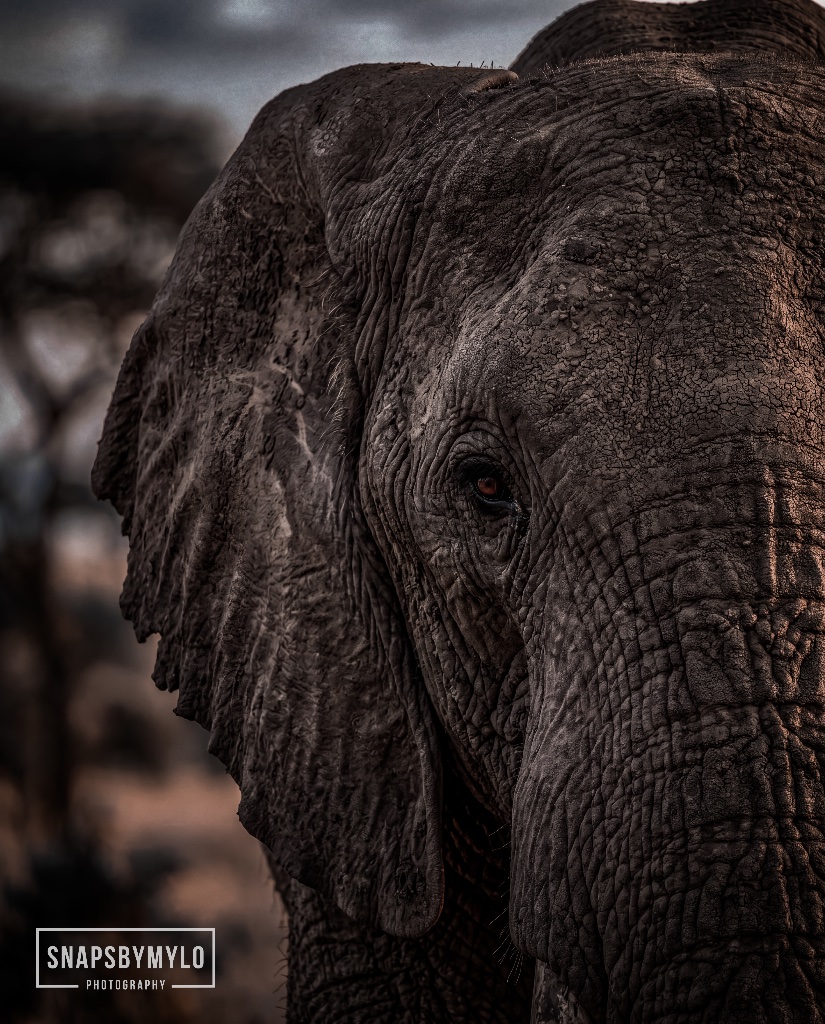
Loxodonta africana
African Elephant
The African elephant is the largest land animal on Earth. Once numbering in the millions across sub-Saharan Africa, decades of poaching for ivory and habitat loss have reduced populations dramatically. The species was uplisted from Vulnerable to Endangered on the IUCN Red List in 2021.
Conservation Status
The African elephant (Loxodonta africana) was uplisted from Vulnerable to Endangered on the IUCN Red List in 2021, reflecting decades of population decline driven primarily by poaching and habitat loss. The species was once found across virtually all of sub-Saharan Africa, with historical population estimates of 3-5 million in the early 20th century. Today, the continental population is estimated at approximately 415,000 individuals, a fraction of its historical range. The species exists in two distinct forms — the savanna elephant (Loxodonta africana) and the forest elephant (Loxodonta cyclotis), which was recognised as a separate species and classified as Critically Endangered in 2021. Forest elephants have suffered even more severe declines, having lost over 80% of their population in three generations. The savanna elephant, while still Endangered, has shown some recovery in southern African countries where conservation efforts are well-funded and strictly enforced. The species is listed on CITES Appendix I, which prohibits all international commercial trade in elephant specimens, including ivory. Despite the ban, the illegal ivory trade remains the single greatest threat to the species, driven by demand primarily in East and Southeast Asia.
Primary Threats
Poaching for ivory has been the dominant threat to African elephants for over a century. Between 2008 and 2012, a surge in poaching — fuelled by rising ivory prices and the involvement of transnational criminal networks — killed an estimated 100,000 elephants across Africa, with some populations in central and west Africa losing over 60% of their numbers. While poaching levels have declined since the 2015 peak, they remain a significant threat, particularly in countries with limited anti-poaching resources. The ivory trade is driven by demand for carved ivory products, jewellery, and trinkets, primarily in China, Vietnam, and other Asian markets. Habitat loss and fragmentation are an escalating threat, particularly as Africa's human population grows and agricultural land expands into elephant range. Elephants require vast territories — a single herd can range over hundreds of square kilometres — and the conversion of land to farming and infrastructure development cuts off migration routes, leading to human-elephant conflict. When elephants raid crops or damage property, they are often killed in retaliation. Climate change and prolonged droughts, particularly in the Horn of Africa and the Sahel, have caused mass elephant deaths from starvation and dehydration, most notably in northern Kenya where over 200 elephants died during the 2021-2022 drought. The species is also threatened by infrastructure development, including roads, railways, and fences that fragment habitat and cause direct mortality through collisions.
Ecological Role
African elephants are a keystone species — their presence shapes entire ecosystems and supports the survival of countless other species. As 'ecosystem engineers,' elephants modify the landscape in ways that create habitat for other organisms. They knock down trees and strip bark, opening up dense woodland and creating grasslands that support grazing herbivores such as zebras, wildebeest, and antelopes. They dig waterholes in dry riverbeds, providing water for themselves and dozens of other species during droughts. Elephants are among the most important seed dispersers in African ecosystems — they consume vast quantities of vegetation and deposit seeds across large distances in their dung, with some tree species depending almost entirely on elephants for seed dispersal. A single elephant can disperse seeds of over 100 plant species, many of which germinate more successfully after passing through the elephant's digestive tract. The loss of elephants from an ecosystem triggers cascading effects — tree density increases, grasslands shrink, and the species that depend on open habitats decline. Elephants live in complex matriarchal societies led by the oldest and most experienced female, with herds of related females and their offspring. Adult males are typically solitary or form loose bachelor groups, joining family herds only to mate. Their intelligence, memory, and social bonds are among the most developed of any non-human species, and they exhibit behaviours consistent with grief, empathy, and self-awareness.
Conservation Efforts
Elephant conservation is one of the most well-funded and high-profile wildlife conservation efforts globally. Key range states including Kenya, Tanzania, Botswana, Zimbabwe, South Africa, and Namibia have established extensive national parks and reserves that protect critical elephant habitat. Kenya's elephant population has more than doubled since the 1989 ivory ban, from approximately 16,000 to over 36,000, thanks to aggressive anti-poaching efforts and community conservation programmes. Botswana holds the world's largest elephant population, estimated at over 130,000, though this concentration has led to debate about overpopulation and human-elephant conflict in some areas. The 1989 CITES ivory trade ban was a landmark moment, collapsing ivory prices and reducing poaching dramatically — though the one-off ivory sales permitted in 1999 and 2008 to Japan and China were followed by renewed poaching surges. The African Elephant Coalition, comprising 32 African nations, has consistently pushed for a total ivory trade ban and the destruction of ivory stockpiles. Several countries, including Kenya, Gabon, and the United States, have held high-profile ivory burnings and crushings to send a signal that ivory has no commercial value. Organisations such as Save the Elephants, the Sheldrick Wildlife Trust, the International Elephant Foundation, the Wildlife Conservation Society, and the World Wildlife Fund work on anti-poaching, habitat protection, human-elephant conflict mitigation, and community-based conservation. Technological approaches including GPS tracking collars, drones, and AI-powered acoustic monitoring are increasingly used to track elephant movements and detect poaching activity in real time.
How to Help
Never purchase ivory or ivory products of any kind — even antique or 'pre-ban' ivory sustains demand and provides cover for the illegal trade. Supporting elephant conservation organisations that fund anti-poaching patrols, habitat protection, and community conservation programmes is one of the most effective ways to help. Reducing demand for ivory in consumer countries through education and advocacy is critical. Supporting community-based conservation initiatives that help local communities coexist with elephants — through compensation for crop damage, beehive fencing, and tourism-based revenue sharing — reduces human-elephant conflict and gives communities an economic stake in elephant survival. Advocating for strong wildlife protection laws and the prosecution of wildlife traffickers is also essential.
Conservation Charities
Organisations working to protect african elephants. Visit their websites to learn more or support their work.