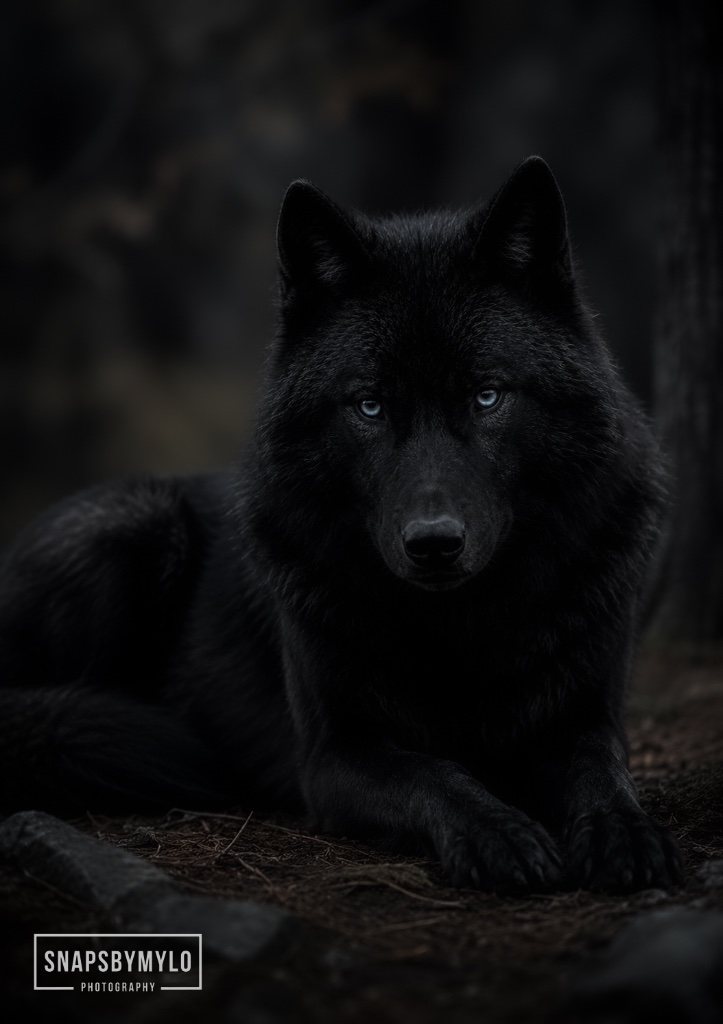
Canis lupus (melanistic variant)
Black Wolf
Black wolves are not a separate species — they are gray wolves with a melanistic coat variant. The gray wolf is classified as Least Concern globally, but regional populations vary widely in status.
What Is a Black Wolf?
Black wolves are not a distinct species. They are gray wolves (Canis lupus) carrying a genetic mutation that results in a black coat. Research led by the University of California, Los Angeles (UCLA), published in the journal Science in 2009, found that the black coat colour in North American wolves is caused by a mutation in the beta-defensin gene (CBD103, also known as the K locus), which was likely introduced through historical crossbreeding with domestic dogs that accompanied humans into the Americas thousands of years ago. The black variant is most common in certain North American populations — in Yellowstone National Park, roughly half the wolves are black. Interestingly, research has shown that black wolves may have slightly different immune system characteristics, and the gene that causes black coat colour is also involved in immune function. Black wolves are rare or absent in European and Asian wolf populations, where the genetic variant was not introduced or did not persist. Gray wolves are highly variable in coat colour, ranging from pure white (in Arctic populations) through grey, brown, and reddish to black.
Conservation Status
The gray wolf (Canis lupus) is classified as Least Concern on the IUCN Red List globally, reflecting its large range and relatively stable global population across North America, Europe, and Asia. However, this broad classification masks significant regional variation. In the United States, the gray wolf was delisted from the Endangered Species Act in most of the country in 2020–2021 (and subsequently relisted in parts of the range following litigation — in February 2022, a federal court restored protections for wolves in 44 states). Wolf management is contentious, with hunting and trapping seasons reinstated in several states (including Wisconsin, Montana, and Idaho) following delisting, sometimes with controversially high quotas. The Mexican wolf (Canis lupus baileyi), the smallest and most genetically distinct gray wolf subspecies, native to the southwestern United States and northern Mexico, remains Endangered, with a recovering population of roughly 241 individuals in the wild as of 2023 (up from just 7 individuals in the 1980s). In Europe, wolves have been recolonising former range — they have returned to Germany, France, and Scandinavia — helped by legal protection under the EU Habitats Directive, though their status remains politically and socially contested. In 2024, the European Commission proposed downgrading the wolf's protection status, a decision that remains under debate.
Primary Threats
The primary threat to wolves globally is human persecution. Despite legal protection in many countries, wolves are still killed illegally through poisoning, trapping, and shooting — illegal killing is difficult to quantify but is believed to be a significant source of mortality in many regions. Legal hunting and culling programmes are implemented to reduce wolf populations in areas of perceived conflict, particularly with livestock farming. In some U.S. states, hunting methods including snaring, trapping, and aerial hunting have been legalised, drawing significant controversy. Habitat loss and fragmentation from development, roads, and resource extraction (including oil and gas development in wolf range) reduce and isolate wolf territories, increasing the likelihood of conflict with humans and reducing genetic diversity in small, isolated populations. Hybridisation with domestic and feral dogs can dilute wolf genetic integrity in some regions, though this is more of a concern for other wolf subspecies (such as the Ethiopian wolf) than for gray wolves generally. Disease — including sarcoptic mange, canine distemper, and rabies, often transmitted from domestic dogs — can cause significant mortality in wolf populations. The Yellowstone population has experienced outbreaks of sarcoptic mange that affected a significant proportion of the population, including black wolves.
Ecological Role
Wolves are apex predators and keystone species in the ecosystems they inhabit. The reintroduction of gray wolves to Yellowstone National Park in 1995–96 demonstrated their critical ecological role — the return of wolves triggered a trophic cascade: they reduced elk populations and changed elk behaviour, which allowed willow and aspen to recover along rivers, which in turn provided habitat for beavers, songbirds, and fish. This cascade, sometimes called 'the ecology of fear', illustrates how the presence of a top predator can reshape entire ecosystems. Wolves also scavenge and provide food for other species, including ravens, eagles, and bears, which feed on wolf kills. The presence of wolves can also reduce the abundance of coyotes, which can benefit smaller predators and prey species that coyotes suppress. Research in Yellowstone has shown that black and grey wolves may have slightly different survival rates and reproductive success — in some years, grey wolves have higher survival during outbreaks of sarcoptic mange, possibly because the gene that causes black coat colour is also involved in immune function, and black wolves may have a different immune response.
Conservation Efforts
The reintroduction of gray wolves to Yellowstone National Park in 1995–96 is one of the most celebrated conservation success stories. Wolves from Canada were released into the park, and the population has since grown and dispersed across the Greater Yellowstone Ecosystem. The Yellowstone Wolf Project, run by the National Park Service, provides one of the most detailed long-term datasets on wolf ecology in the world, including the dynamics of black and grey coat variants — researchers have tracked the proportion of black wolves in the population over decades and found that it remains relatively stable at around 45–50%, maintained by a balance of genetic and environmental factors. The International Wolf Center in Minnesota provides public education about wolves and supports research. Defenders of Wildlife works on coexistence programmes, including non-lethal predator deterrents such as fladry (flagging hung on fences, which wolves are reluctant to cross), guard dogs, range riders who monitor livestock, and the use of turbo-fladry (fladry with electric fencing). The EU LIFE programme has funded numerous wolf conservation and coexistence projects across Europe, including in France, Italy, Spain, and Germany. The Mexican Wolf Recovery Programme, a binational effort between the U.S. Fish and Wildlife Service and Mexico, has been working since 1998 to recover this critically imperilled subspecies through captive breeding and reintroduction into Arizona, New Mexico, and Mexico. The WWF and the Wildlife Conservation Society also support wolf conservation initiatives globally.
How to Help
Supporting wolf conservation organisations, advocating for science-based wolf management policies, and supporting coexistence programmes that help ranchers protect livestock without killing wolves all contribute. Choosing products from farms that use predator-friendly practices (such as those certified by Predator Friendly or similar schemes) provides economic incentives for coexistence. Educating others about the ecological importance of wolves and dispelling myths and misconceptions about wolf behaviour is also critical, as public attitudes significantly influence wolf management decisions.
Conservation Charities
Organisations working to protect black wolfs. Visit their websites to learn more or support their work.