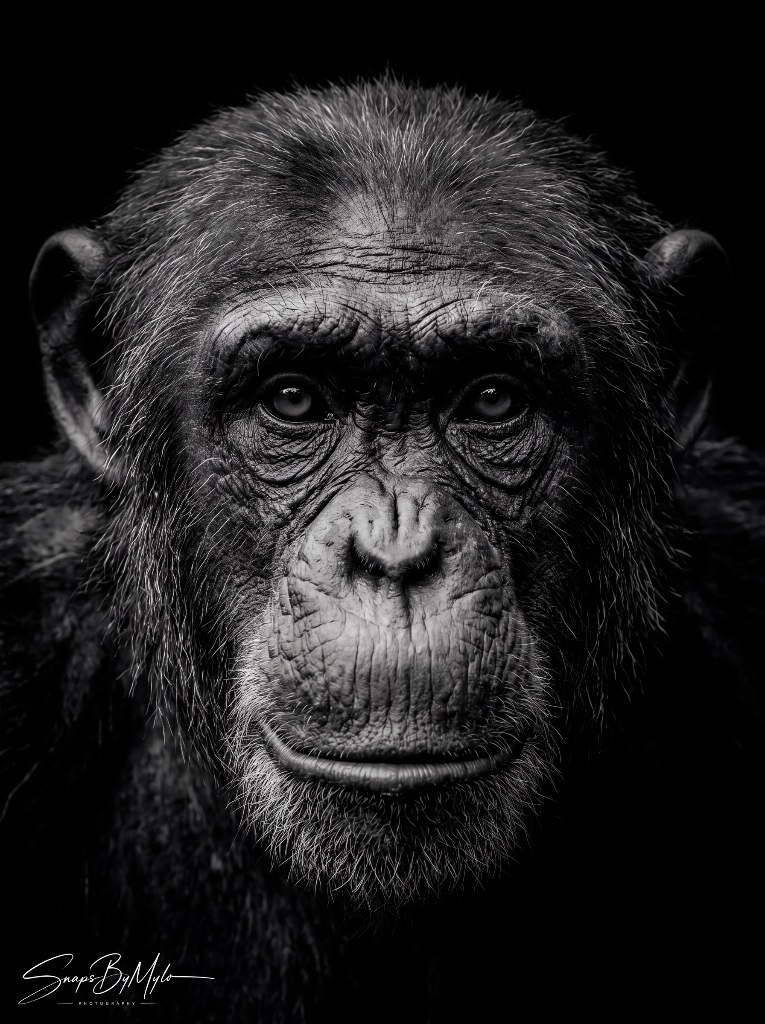
Pan troglodytes
Chimpanzee
The chimpanzee is one of our closest living relatives, sharing approximately 98.7% of our DNA. Classified as Endangered, chimpanzee populations have declined significantly due to habitat loss, poaching, disease, and the illegal pet trade.
Conservation Status
The chimpanzee (Pan troglodytes) is classified as Endangered on the IUCN Red List, with a decreasing population trend. There are four recognised subspecies: the Western chimpanzee (Pan troglodytes verus), the Nigeria-Cameroon chimpanzee (Pan troglodytes ellioti), the Central chimpanzee (Pan troglodytes troglodytes), and the Eastern chimpanzee (Pan troglodytes schweinfurthii). The total wild population is estimated at approximately 170,000–300,000 individuals, though accurate counts are difficult due to the chimpanzee's vast and often remote forest range across 21 countries in equatorial Africa. The Western chimpanzee is classified as Critically Endangered, with an estimated population of fewer than 60,000 individuals — it has already been extirpated from Burkina Faso, Benin, and Togo. The Nigeria-Cameroon chimpanzee is the most threatened of the four subspecies, with an estimated population of fewer than 6,000 individuals. Overall, chimpanzee populations are believed to have declined by more than 66% over the past 30 years (three generations), and the decline is projected to continue.
Primary Threats
Habitat loss and fragmentation are the most significant threats to chimpanzees. The forests of West and Central Africa are being cleared at an alarming rate for agriculture, logging, mining, and infrastructure development. The Congo Basin — the second-largest rainforest on Earth — loses approximately 1 million hectares of forest per year. As human populations grow, chimpanzee habitat is increasingly fragmented, isolating small populations that are vulnerable to inbreeding and local extinction. Poaching for bushmeat is a severe and persistent threat across much of the chimpanzee's range. Chimpanzees are hunted for food, and infant chimpanzees are captured for the illegal pet trade — the mother is typically killed to obtain the infant, and for every infant that survives to be sold, it is estimated that up to ten chimpanzees may die in the process of capture and transport. Disease is a critical and growing threat, particularly because chimpanzees share approximately 98.7% of their DNA with humans, making them highly susceptible to human respiratory infections, to which they have little or no natural immunity. Outbreaks of respiratory disease transmitted from humans have caused significant mortality in habituated chimpanzee groups, including at long-term research sites such as Gombe and Tai Forest. Ebola virus disease has also caused devastating mortality in some ape populations in Central Africa. Political instability and armed conflict in regions such as the eastern Democratic Republic of Congo undermine conservation efforts and facilitate poaching and habitat destruction. Climate change is projected to alter the forest ecosystems chimpanzees depend on, with increasing drought and deforestation reducing the extent of suitable habitat.
Ecological Role
Chimpanzees are the most abundant and widespread of the great apes, and they play a crucial ecological role in tropical forest ecosystems. As the largest fruit-eating animal in many of their habitats, they are among the most important seed dispersers in African forests — research has shown they disperse the seeds of over 200 plant species across significant distances, contributing to forest regeneration and plant diversity. Some tree species may depend heavily on chimpanzees for seed dispersal. Chimpanzees are also notable for their use of tools — they fashion and use sticks to extract termites and ants from nests, use stones to crack open nuts, and use leaves as sponges to collect water — behaviours that vary between populations and are transmitted culturally, much like human traditions. This tool use, combined with their complex social structures, self-recognition, and capacity for problem-solving, makes chimpanzees one of the most intelligent non-human species. They live in large, complex communities led by a dominant alpha male, with intricate social bonds, alliances, and hierarchies. Their vocalisations, gestures, and facial expressions form a sophisticated communication system. The loss of chimpanzees from a forest would reduce seed dispersal for many tree species, with cascading effects on forest composition and the species that depend on those trees.
Conservation Efforts
Chimpanzee conservation is supported by some of the longest-running field research programmes in the world. The Gombe Stream Research Centre in Tanzania, established by Jane Goodall in 1960, has produced one of the most comprehensive datasets on any animal species, and the Jane Goodall Institute works on chimpanzee conservation, community-centred conservation, and environmental education across chimpanzee range countries. The Kibale Chimpanzee Project in Uganda and the Tai Chimpanzee Project in Cote d'Ivoire are other critical long-term research sites. Key protected areas include Gombe National Park and Mahale Mountains National Park (Tanzania), Kibale National Park and Budongo Forest Reserve (Uganda), Tai National Park (Cote d'Ivoire), Loango National Park (Gabon), and the Okapi Wildlife Reserve and Kahuzi-Biega National Park (DRC). The Pan African Programme, led by the Max Planck Institute for Evolutionary Anthropology, coordinates research across numerous sites. The Wild Chimpanzee Foundation works specifically on chimpanzee conservation in West Africa, focusing on the Critically Endangered Western chimpanzee. Sanctuaries across Africa, coordinated through the Pan African Sanctuary Alliance (PASA), rescue, rehabilitate, and care for chimpanzees orphaned by the bushmeat trade, though reintroduction to the wild remains challenging. Community conservation programmes that provide alternative livelihoods and reduce reliance on bushmeat are increasingly important. All chimpanzee subspecies are listed on CITES Appendix I, prohibiting international commercial trade. The Great Apes Survival Partnership (GRASP), a partnership between UNEP and UNESCO, coordinates international action on great ape conservation.
How to Help
Supporting reputable chimpanzee conservation organisations is one of the most effective actions. Choosing sustainably sourced timber and minerals — including conflict-free certified electronics that avoid minerals sourced from chimpanzee habitat in the DRC — helps reduce pressure on chimpanzee forests. Reducing paper and wood consumption, supporting certified sustainable forestry (FSC), and advocating for stronger enforcement of wildlife trade laws all contribute. Never purchasing bushmeat, primates, or primate parts as pets is essential. Supporting community-based conservation programmes that give local people an economic stake in chimpanzee survival — through ecotourism, sustainable livelihoods, and education — helps build lasting support for conservation. For those visiting chimpanzee habitats, choosing responsible tour operators that follow strict health and distance protocols is essential to prevent disease transmission to wild populations.
Conservation Charities
Organisations working to protect chimpanzees. Visit their websites to learn more or support their work.