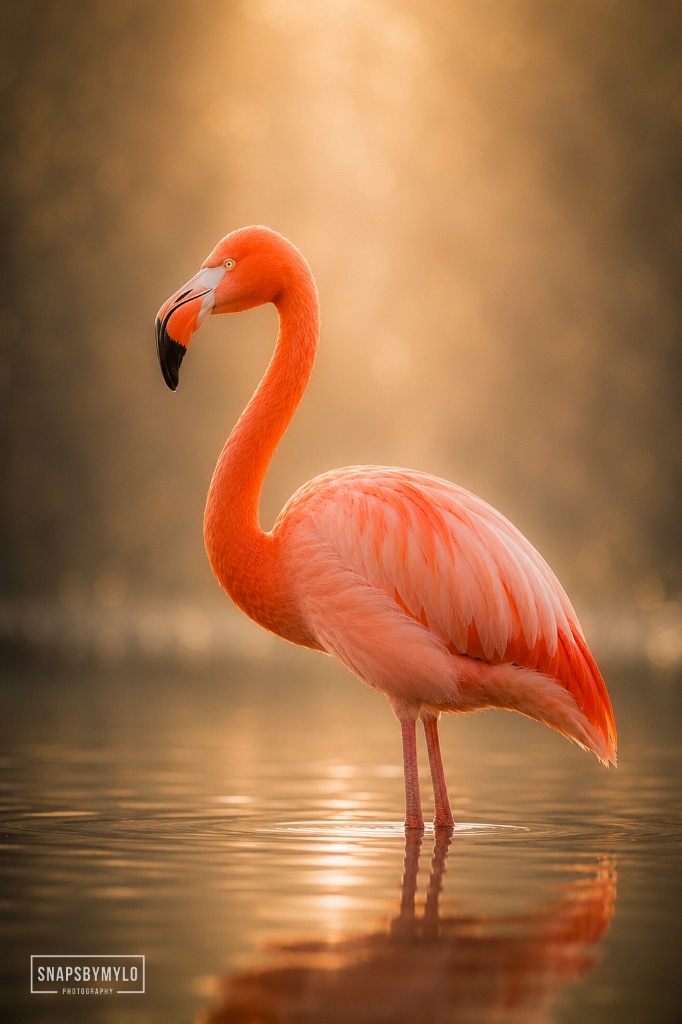
Phoenicopteridae family (six species)
Flamingo
There are six flamingo species. Most are Least Concern, but the Lesser Flamingo is Near Threatened, and all species rely on fragile saline wetland habitats that are increasingly under pressure.
Conservation Status
There are six flamingo species. The Greater Flamingo (Phoenicopterus roseus) is the most widespread, found across Africa, southern Europe, and South Asia, and is classified as Least Concern. The American Flamingo (Phoenicopterus ruber), found in the Caribbean and the Galapagos, is also Least Concern. The Chilean Flamingo (Phoenicopterus chilensis), native to South America, is classified as Near Threatened. The Lesser Flamingo (Phoeniconaias minor) is classified as Near Threatened, with a declining population estimated at approximately 2.2–3.2 million individuals — the majority of the global population breeds at just three sites: Lake Natron in Tanzania, Lake Bogoria in Kenya, and the Makgadikgadi Pans in Botswana. James Flamingo (Phoenicoparrus jamesi) is Near Threatened, and the Andean Flamingo (Phoenicoparrus andinus) is classified as Vulnerable, with the smallest population of all flamingo species — estimated at approximately 34,000 individuals. The Andean and James flamingos breed on high-altitude salt lakes in the Andes, at elevations of over 4,000 metres.
Primary Threats
Flamingos depend on highly specific saline and alkaline lake habitats, which are naturally scarce and increasingly threatened. Water abstraction for agriculture and industry lowers lake levels and increases salinity beyond what flamingos' food sources — blue-green algae (Spirulina), diatoms, and brine shrimp — can tolerate. Lake Natron in Tanzania, the single most important Lesser Flamingo breeding site in the world, was threatened by a proposed soda ash extraction plant in the 2000s, which would have disrupted breeding — the project was cancelled following international pressure, but similar threats persist elsewhere. Mining, particularly of lithium and borax in South America's salt flats, threatens the high-altitude lakes where Andean and James flamingos breed. Pollution, disturbance at nesting colonies (flamingos are highly sensitive to human intrusion and will abandon nests en masse if disturbed), and climate change altering rainfall patterns all pose significant threats. In the Mediterranean region, the degradation of coastal wetlands reduces the availability of foraging habitat for Greater Flamingos. Lead poisoning from ingested shotgun pellets in lake sediments has caused significant mortality events in some flamingo populations.
Ecological Role
Flamingos are filter feeders that play a role in the ecology of saline lake ecosystems. They consume large quantities of blue-green algae, brine shrimp, and diatoms, and their feeding activity helps regulate the biological communities of these extreme environments. The characteristic pink colouration of flamingos comes from carotenoid pigments in the algae and crustaceans they eat — without sufficient dietary pigments, flamingos lose their colour. Flamingos' feeding activity also aerates lake sediments and redistributes nutrients. Their guano contributes to the nutrient cycling of these ecosystems. Saline lakes are among the most extreme and species-poor aquatic environments, but they support unique communities of microorganisms and invertebrates that flamingos depend on, making these ecosystems irreplaceable.
Conservation Efforts
Key flamingo sites are protected under international conventions. Lake Bogoria and Lake Nakuru in Kenya are Ramsar Wetlands of International Importance. The Laguna Colorada in Bolivia protects Andean and James flamingo habitat. The Flamingo Specialist Group, part of the IUCN Species Survival Commission and coordinated by the Wildfowl & Wetlands Trust (WWT), coordinates research and conservation action across the flamingo range. Conservation priorities include protecting breeding sites from disturbance through buffer zones and access restrictions, maintaining the hydrological integrity of saline lakes, and reducing industrial impacts on critical wetlands. The WWT runs long-term monitoring programmes on flamingo populations at key sites. International cooperation is essential, as flamingo populations span multiple countries and depend on a network of sites for breeding, feeding, and migration. The Agreement on the Conservation of African-Eurasian Migratory Waterbirds (AEWA) covers the Greater and Lesser Flamingos in the African-Eurasian flyway.
How to Help
Supporting wetland conservation organisations, advocating for the protection of saline lake ecosystems from industrial extraction, and reducing water consumption all contribute to flamingo conservation. Choosing sustainably sourced lithium products (used in batteries) can help reduce pressure on South American salt flats. Raising awareness about the vulnerability of flamingo breeding sites to disturbance is also important — even a single human intrusion at a nesting colony can cause the abandonment of thousands of eggs and chicks.
Conservation Charities
Organisations working to protect flamingos. Visit their websites to learn more or support their work.