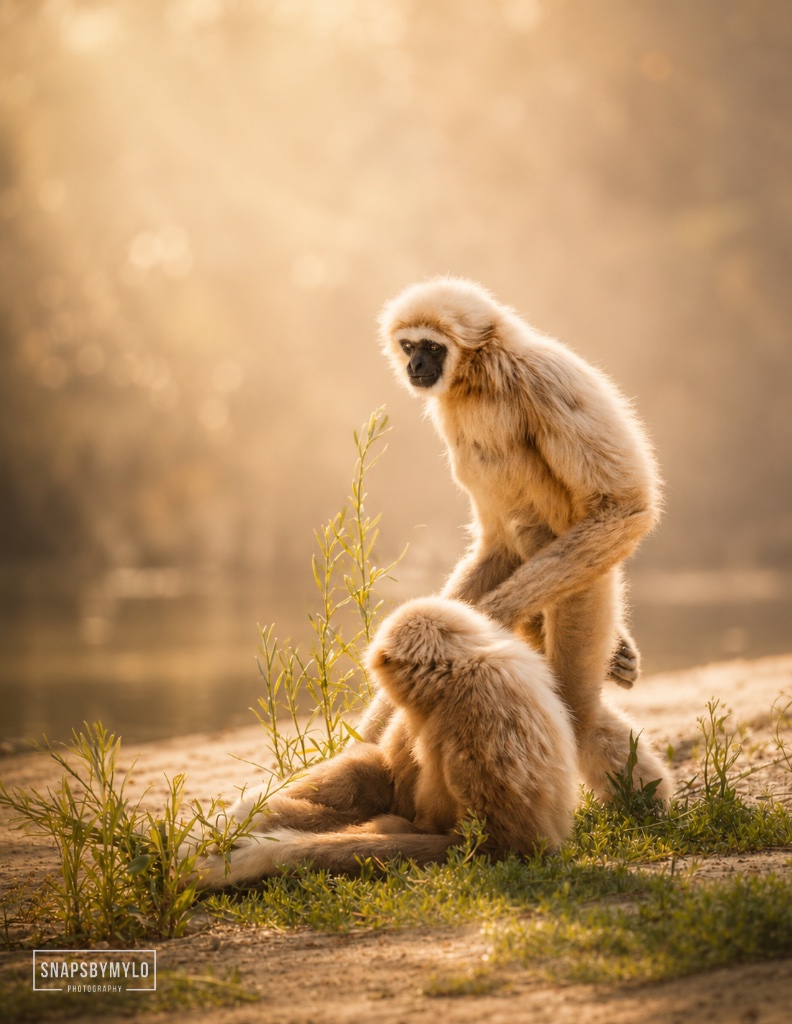
Hylobatidae family (multiple species)
Gibbon
Gibbons are among the most threatened primates. Most gibbon species are Endangered or Critically Endangered, primarily due to habitat loss and the illegal pet trade.
Conservation Status
The gibbon family (Hylobatidae) comprises roughly 20 species, and nearly all are threatened with extinction. The Hainan gibbon (Nomascus hainanus) is the rarest primate in the world, with fewer than 40 individuals surviving in a single forest fragment in the Bawangling National Nature Reserve on Hainan Island, China. The Cao vit gibbon (Nomascus nasutus) has a population of approximately 135 individuals in a single transboundary forest between China and Vietnam and was once thought to be extinct until its rediscovery in 2002. The Western hoolock gibbon (Hoolock hoolock) has declined by over 90% in Bangladesh, India, and Myanmar, with an estimated total population of fewer than 5,000 individuals. The majority of gibbon species are listed as Endangered or Critically Endangered on the IUCN Red List. No gibbon species is classified as Least Concern. The family is considered one of the most threatened groups of mammals on Earth.
Primary Threats
Habitat loss and fragmentation are the dominant threats to gibbons. They are arboreal primates that rely on continuous forest canopy — they are the fastest and most agile of all tree-dwelling, non-flying mammals, capable of leaping up to 15 metres between branches, but they rarely descend to the ground, so gaps in the forest from logging, agriculture, and infrastructure create impassable barriers. The expansion of rubber and palm oil plantations in Southeast Asia has converted vast areas of gibbon habitat. In Laos, Vietnam, and Cambodia, illegal logging and conversion of forest for coffee and other cash crops have destroyed significant gibbon habitat. The illegal pet trade is also a significant threat: gibbons are captured as infants for the exotic pet market, and the mother is typically killed to obtain the infant — for every infant that survives to be sold, it is estimated that several others die during capture and transport. Hunting for traditional medicine and bushmeat further depletes populations. Road construction through forests fragments gibbon territories and provides access for hunters and loggers.
Ecological Role
Gibbons play an important ecological role as seed dispersers in tropical forests. They consume large quantities of fruit and disperse seeds across their territories through their droppings, contributing to forest regeneration and plant diversity. Their territorial calls — the haunting, complex songs that can carry for over 2 km through the forest — are among the most distinctive sounds of the Asian rainforest and serve to maintain pair bonds and defend territories. The loss of gibbons from a forest can reduce seed dispersal for certain tree species, with knock-on effects for forest composition. Gibbons are also considered indicator species — their presence indicates a healthy, intact forest ecosystem.
Conservation Efforts
Conservation efforts include the protection of key forest reserves such as the Bawangling National Nature Reserve (Hainan gibbon), where strict protection and reforestation have helped the population slowly increase from a low of approximately 13 individuals in 2003, and the Bangliang Nature Reserve in Guangxi (Cao vit gibbon). Organisations such as the Gibbon Conservation Alliance, Flora and Fauna International, and the Borneo Nature Foundation work on habitat protection, reforestation to reconnect forest fragments, and community education. Gibbon rehabilitation centres in Thailand, Indonesia (including the Kalaweit programme), and Vietnam rescue and rehabilitate confiscated pets with the goal of reintroduction, though this is challenging due to the gibbons' complex social and territorial behaviour — rehabilitated gibbons must learn to forage, navigate the canopy, and establish territories. The IUCN Primate Specialist Group's Section on Small Apes coordinates global gibbon conservation strategy and research. International cooperation is essential, as many gibbon species span national borders.
How to Help
Supporting gibbon conservation organisations, avoiding products containing uncertified palm oil, and never purchasing primates or primate parts as pets all contribute. Supporting reforestation programmes that reconnect fragmented forest patches is critical for gibbons, as they cannot cross gaps in the canopy. Raising awareness about the illegal pet trade and the cruelty involved in capturing infant gibbons is also important.
Conservation Charities
Organisations working to protect gibbons. Visit their websites to learn more or support their work.