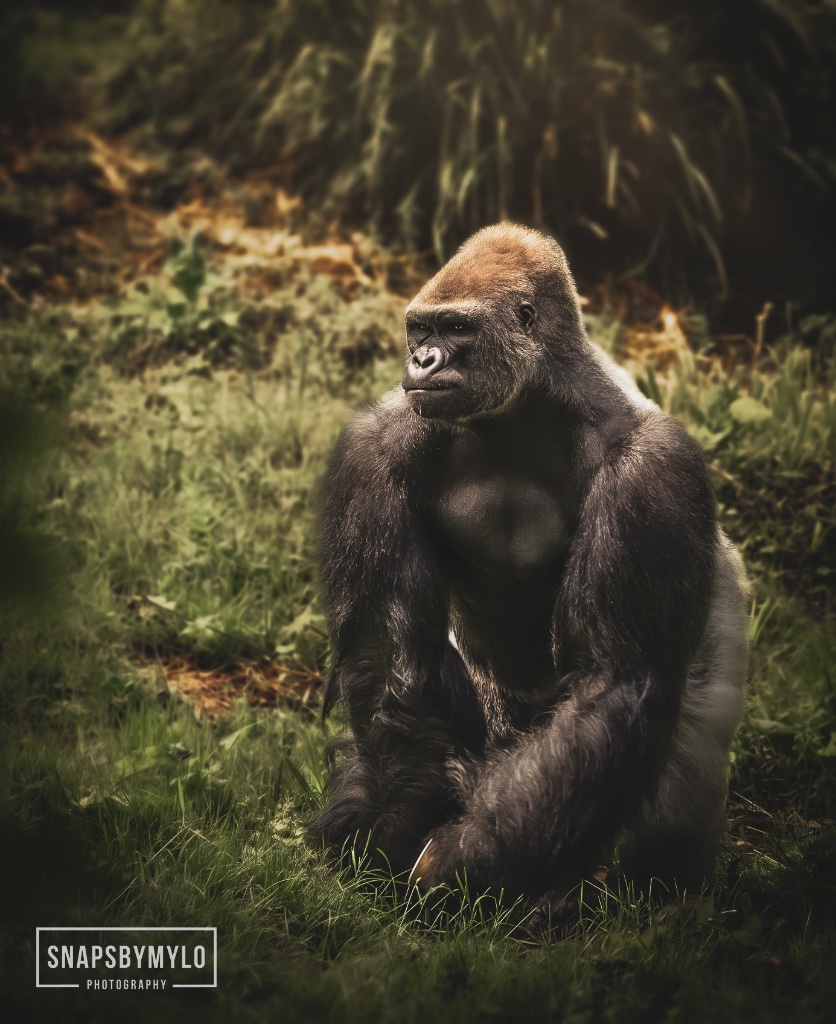
Gorilla gorilla (Western), Gorilla beringei (Eastern)
Gorilla
Gorillas are the largest living primates and one of our closest relatives. Both species — the Western gorilla and the Eastern gorilla — are threatened with extinction, driven by habitat loss, poaching, and disease.
Conservation Status
There are two gorilla species, each divided into two subspecies. The Western gorilla (Gorilla gorilla) includes the Western lowland gorilla (Gorilla gorilla gorilla) and the Cross River gorilla (Gorilla gorilla diehli). The Eastern gorilla (Gorilla beringei) includes the Mountain gorilla (Gorilla beringei beringei) and the Eastern lowland or Grauer's gorilla (Gorilla beringei graueri). The Western lowland gorilla is classified as Critically Endangered, with a population estimated at approximately 316,000 individuals as of a 2018 reassessment, though populations are believed to have declined by over 60% in the preceding 20–25 years. The Cross River gorilla is the most threatened, with fewer than 300 individuals remaining in a fragmented forest area on the Nigeria-Cameroon border. The Mountain gorilla is classified as Endangered, with approximately 1,063 individuals as of the most recent census — it is the only great ape species whose population is increasing, thanks to intensive conservation efforts. The Eastern lowland gorilla (Grauer's gorilla) is classified as Critically Endangered, with the population having declined by approximately 77% since the mid-1990s to an estimated fewer than 3,800 individuals.
Primary Threats
Habitat loss and fragmentation are major threats to all gorilla subspecies. The forests of Central Africa are being cleared for agriculture, logging, and infrastructure. The Congo Basin — the second-largest rainforest on Earth — is losing approximately 1 million hectares of forest per year. Commercial logging opens previously inaccessible forest to human settlement and hunting. Poaching for bushmeat is a severe threat, particularly for Western lowland gorillas. Despite legal protection, gorillas are killed for food, and infant gorillas are captured for the illegal pet trade — for every infant that survives capture, it is estimated that multiple gorillas are killed in the process, including the mother and protective group members. Disease is a critical and growing threat. Gorillas share approximately 98% of their DNA with humans, making them susceptible to human diseases, including respiratory viruses to which they have no natural immunity. Ebola virus disease has caused devastating mortality in Western lowland gorilla populations — a 2003 study estimated that Ebola had killed approximately 5,000 gorillas in the Lossi Sanctuary in the Republic of Congo alone, and outbreaks across the region are estimated to have killed tens of thousands of gorillas since the early 1990s. Political instability and armed conflict, particularly in the eastern Democratic Republic of Congo, undermine conservation efforts and facilitate poaching and habitat destruction. Climate change is projected to alter the montane and lowland forest ecosystems gorillas depend on.
Ecological Role
Gorillas are the largest living primates, with adult male silverbacks weighing up to 200 kg. Despite their power and formidable appearance, gorillas are primarily herbivorous, consuming large quantities of leaves, stems, fruit, and bark. As the largest fruit-eating animal in their ecosystem, Western lowland gorillas play a crucial role as seed dispersers — research has shown they disperse the seeds of over 200 plant species across significant distances, contributing to forest regeneration and plant diversity. Some tree species may depend heavily on gorillas for seed dispersal. Gorillas are also considered a keystone species and an umbrella species — protecting gorilla habitat protects the entire forest ecosystem, including chimpanzees, forest elephants, okapis, and hundreds of bird and reptile species. Mountain gorillas, by clearing paths through dense vegetation and depositing nutrients through their dung, help shape the structure of the montane forest. Their social structure — family groups led by a dominant silverback — is one of the most studied and fascinating social systems in the animal kingdom.
Conservation Efforts
Mountain gorilla conservation is one of the world's most celebrated success stories. The Dian Fossey Gorilla Fund International, founded on the pioneering work of Dian Fossey in Rwanda's Volcanoes National Park, has conducted continuous monitoring and protection of mountain gorillas since 1967. The International Gorilla Conservation Programme (IGCP) — a coalition of the WWF, Conservation International, and Fauna & Fluna International — works across the three range countries of the mountain gorilla (Rwanda, Uganda, and the Democratic Republic of Congo) on anti-poaching, habitat protection, and community-based conservation. The Virunga National Park in the DRC, Africa's oldest national park, protects critical mountain gorilla habitat despite enormous challenges from armed conflict. The Bwindi Impenetrable National Park in Uganda is home to roughly half the world's mountain gorilla population. Gorilla tourism has been a transformative conservation tool — Rwanda's gorilla trekking permits generate millions of dollars annually, with a portion going to local communities, creating powerful economic incentives for conservation. Strict health protocols, including mandatory distance rules and face masks for visitors, protect gorillas from human disease transmission. For Western lowland gorillas, the Sangha Trinational protected area complex — spanning Cameroon, the Central African Republic, and the Republic of Congo — is a critical stronghold, as is the Odzala-Kokoua National Park in the Republic of Congo. The Aspinall Foundation runs reintroduction programmes for captive-born Western lowland gorillas in the Republic of Congo and Gabon.
How to Help
Supporting reputable gorilla conservation organisations is one of the most effective actions. Choosing sustainably sourced timber and minerals — including conflict-free certified electronics that avoid minerals sourced from gorilla habitat in the DRC — helps reduce pressure on gorilla forests. Reducing paper and wood consumption, supporting certified sustainable forestry (FSC), and advocating for stronger enforcement of wildlife trade laws all contribute. For those visiting gorilla habitats, choosing responsible tour operators that follow strict health and distance protocols is essential. Never purchasing bushmeat or primate products is critical, and supporting community-based conservation programmes that give local people an economic stake in gorilla survival helps build lasting support for conservation.
Conservation Charities
Organisations working to protect gorillas. Visit their websites to learn more or support their work.