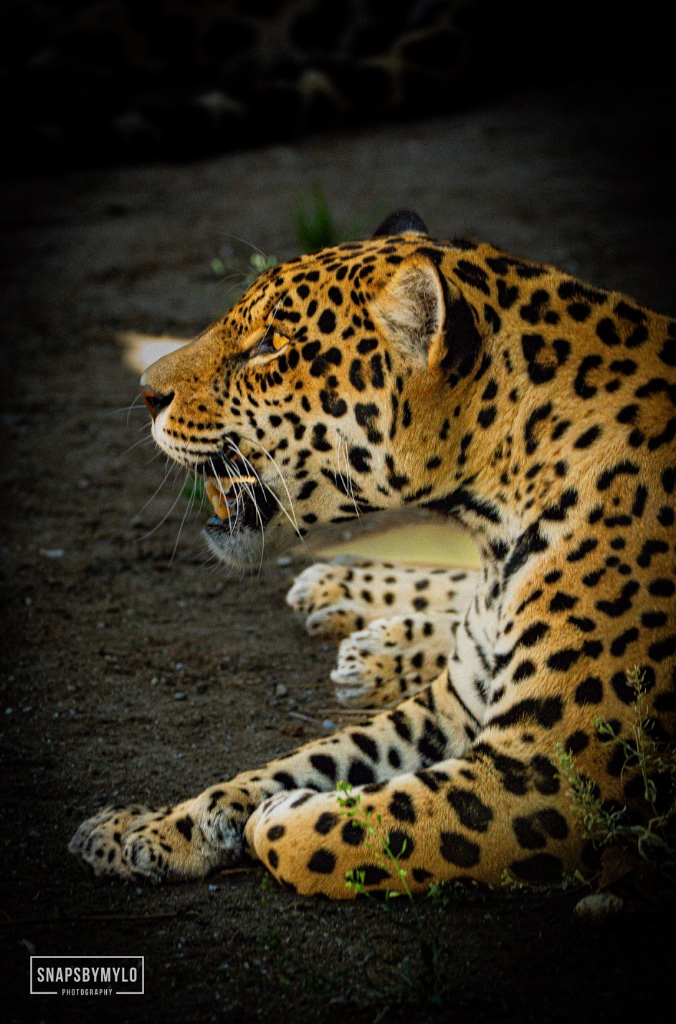
Panthera onca
Jaguar
The Jaguar is the largest cat in the Americas and is classified as Near Threatened, with populations declining due to deforestation, poaching, and conflict with ranchers.
Conservation Status
The Jaguar (Panthera onca) is classified as Near Threatened on the IUCN Red List, with a decreasing population trend. The jaguar has been extirpated from approximately 46% of its historic range, which once stretched from the southwestern United States through Mexico, Central America, and into northern Argentina. The jaguar is now extinct in El Salvador and Uruguay and nearly so in the United States (though occasional individuals are sighted in Arizona and New Mexico, likely dispersing from Mexico). The remaining populations are concentrated in the Amazon Basin, which holds the largest contiguous jaguar population — an estimated 86% of the total jaguar range is in the Amazon. The Pantanal wetlands of Brazil, Bolivia, and Paraguay are another stronghold, with one of the highest jaguar densities recorded. An estimated 173,000 jaguars remain in the wild, though this figure is uncertain and based on modelling rather than comprehensive surveys. The species has been extirpated from approximately 40% of its historic range in the last century.
Primary Threats
Deforestation, particularly in the Amazon, is the most significant threat. The Amazon has lost approximately 17% of its forest cover since 1970, and deforestation rates in Brazil surged to over 13,000 square kilometres per year in recent peaks. As forest is converted to cattle ranches, soy plantations, and infrastructure (including roads and dams), jaguar habitat is lost and fragmented. The Amazon is approaching a tipping point where deforestation could cause large-scale forest dieback, converting rainforest to savanna. Ranchers kill jaguars in retaliation for cattle predation, and in some regions, professional hunters (jaguar killers known as 'onçeiros' in Portuguese) are hired to eliminate jaguars from ranching areas. Poaching for the illegal wildlife trade has emerged as a growing threat — jaguar teeth, skins, and body parts are increasingly trafficked from South America to Asia, where they are used in jewellery and traditional medicine, sometimes as a substitute for tiger parts. A 2018 investigation by World Animal Protection documented the trade in jaguar parts in Suriname and other South American countries. Mining (particularly for gold, which uses mercury and contaminates waterways), dam construction, and road development further fragment habitat and provide access for hunters and settlers. Climate change and the increasing frequency and severity of droughts in the Amazon threaten the integrity of remaining habitat.
Ecological Role
Jaguars are apex predators and keystone species in Neotropical ecosystems. They are the largest cats in the Americas and the third largest in the world, after tigers and lions. Jaguars have an exceptionally powerful bite — they can pierce the skulls of their prey and crack open turtle shells — and they prey on over 85 species, including capybaras, peccaries, deer, caimans, and anacondas. By regulating prey populations, they maintain the balance of forest and wetland ecosystems. The presence of jaguars is an indicator of healthy, intact ecosystems, and their loss can trigger trophic cascades — for example, the overpopulation of herbivores can lead to overgrazing and changes in vegetation structure. Jaguars also help maintain the diversity of prey species by preferentially hunting the most abundant species, preventing any single species from dominating. The Pantanal, where jaguars are most dense, supports an extraordinary diversity of prey species that coexist with the jaguar.
Conservation Efforts
The Jaguar 2030 Conservation Roadmap, endorsed by 14 jaguar range states at the United Nations in 2018, aims to secure 30 priority jaguar landscapes by 2030 and maintain connectivity between them through jaguar corridors. The Jaguar Corridor Initiative, led by Panthera, works to identify and protect a continuous network of habitat linking jaguar populations from Mexico to Argentina — genetic analysis has confirmed that jaguars still move across this vast range, and maintaining connectivity is critical to prevent isolation and inbreeding. Key protected areas include the Amazon's national parks and reserves (such as Manu National Park in Peru and Jaú National Park in Brazil), the Pantanal (shared across Brazil, Bolivia, and Paraguay), and the Cockscomb Basin Wildlife Sanctuary in Belize, established in 1986 as the world's first jaguar reserve. Community-based programmes that compensate ranchers for livestock losses and promote predator-friendly ranching practices — such as keeping cattle away from forest edges, using guard dogs, and installing electric fencing — are proving effective at reducing retaliatory killing. In the Pantanal, jaguar tourism has become a significant economic activity, providing an incentive for ranchers to tolerate jaguars on their land. The WWF works on jaguar conservation across range countries, with a focus on protecting critical habitat and reducing human-jaguar conflict.
How to Help
Supporting jaguar conservation organisations, choosing sustainably sourced products from South America (particularly beef and soy, which are major drivers of Amazon deforestation), and advocating for stronger enforcement of wildlife trade laws all contribute. Supporting community-based conservation programmes that help ranchers coexist with jaguars is highly effective. Reducing carbon emissions to address climate change is critical for the long-term integrity of Amazonian habitat. Never purchasing jaguar parts or products derived from jaguar hunting is essential.
Conservation Charities
Organisations working to protect jaguars. Visit their websites to learn more or support their work.