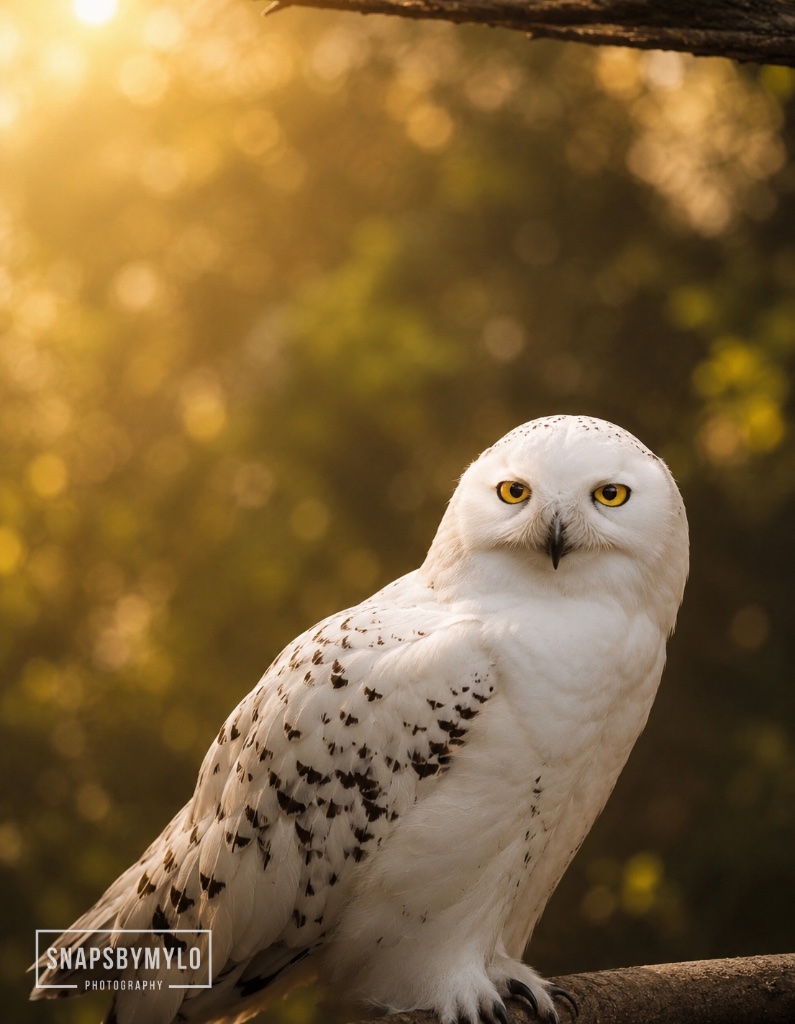
Bubo scandiacus
Snowy Owl
The Snowy Owl was uplisted to Vulnerable in 2017. Climate change is altering its Arctic breeding habitat and the lemming population cycles it depends on for food.
Conservation Status
The Snowy Owl (Bubo scandiacus) was reclassified from Least Concern to Vulnerable on the IUCN Red List in 2017. The species is circumpolar, breeding in the Arctic tundra of North America (Alaska, northern Canada, Greenland) and Eurasia (Scandinavia, Russia, Siberia) and wintering further south in open grasslands and coastal areas. The global population is estimated at approximately 28,000 mature individuals, though estimates are difficult due to the owl's remote and vast breeding range and its irruptive behaviour — in some winters, large numbers appear far south of their normal range in events known as 'irruptions', driven by fluctuations in prey availability. The population is believed to have declined by more than 30% over three generations (approximately 30 years). In North America, the species was listed as Endangered under Canada's Species at Risk Act in 2024, reflecting significant declines in the Canadian breeding population.
Primary Threats
Climate change is the most significant and complex threat to the Snowy Owl. The Arctic is warming at roughly twice the global average rate (a phenomenon known as Arctic amplification), which alters tundra vegetation (as shrubs expand into previously open tundra), affects snow cover patterns (with earlier snowmelt and later snow accumulation), and disrupts the population cycles of lemmings and voles — the owl's primary prey during the breeding season. Lemming populations naturally cycle between boom and bust years, and snowy owls time their breeding to coincide with lemming peaks — in years when lemmings are abundant, snowy owls may lay up to 11 eggs, while in poor lemming years they may not breed at all. Climate change is thought to be disrupting these cycles, potentially reducing the frequency and amplitude of lemming peaks. Collisions with vehicles, power lines, and aircraft are sources of mortality, particularly for wintering birds that gather near airports and in open agricultural areas. Illegal shooting, disturbance at nesting sites (as Arctic development and tourism increase), and the accumulation of environmental contaminants such as mercury (which is transported to the Arctic by atmospheric circulation and accumulates in food webs) and persistent organic pollutants (POPs) also pose threats. The increasing industrial development of the Arctic — including oil and gas extraction, mining, and shipping — threatens to fragment and degrade snowy owl breeding habitat.
Life Cycle and Behaviour
Snowy Owls are the heaviest owl in North America, with females weighing up to 2.3 kg and males up to 1.8 kg. They are diurnal (active during daylight), which is unusual among owls — this is an adaptation to the 24-hour daylight of the Arctic summer breeding season. They nest on the ground, scraping a shallow depression on elevated tundra hummocks with good visibility. The female incubates the eggs while the male provides food, primarily lemmings. In good lemming years, a snowy owl family may consume over 1,500 lemmings during the breeding season. Young owls disperse widely after fledging, and in irruption years, individuals have been recorded as far south as Florida and the Caribbean. Snowy Owls can live for over 10 years in the wild. Their white plumage (more extensive in males, which become almost pure white with age) provides camouflage in the Arctic landscape. This ground-nesting habit makes them particularly vulnerable to disturbance and to predators such as Arctic foxes and wolves.
Conservation Efforts
Project SnowStorm, a collaborative research initiative in North America launched in 2013, uses GPS-GSM tracking tags to study snowy owl movements and winter ecology — the data has revealed previously unknown information about their wintering ranges, habitat use, and migration patterns. The Owl Research Institute, based in Montana, conducts long-term monitoring of snowy owl breeding in Alaska and has been studying the species for over 30 years. Internationally, the snowy owl is protected under the Migratory Bird Treaty Act in the United States and similar legislation in other range countries. The species' Arctic breeding habitat is difficult to protect through traditional conservation designations due to its vast extent and remoteness, making climate change mitigation the most critical long-term conservation action. Monitoring lemming populations and protecting key wintering habitats — such as coastal grasslands, agricultural fields, and airports that serve as important wintering sites (airports mimic the open tundra habitat the owls prefer) — are ongoing priorities. The Convention on Migratory Species (CMS) has included the snowy owl on its appendices, encouraging international cooperation on its conservation.
How to Help
Supporting Arctic research and conservation organisations, advocating for strong climate change policies, and supporting long-term monitoring programmes all contribute. During winter irruptions, giving snowy owls space and avoiding approaching or flushing them is important, as these events are stressful and the owls are often in poor body condition. Reporting snowy owl sightings to citizen science platforms like eBird helps researchers track their movements and populations.
Conservation Charities
Organisations working to protect snowy owls. Visit their websites to learn more or support their work.