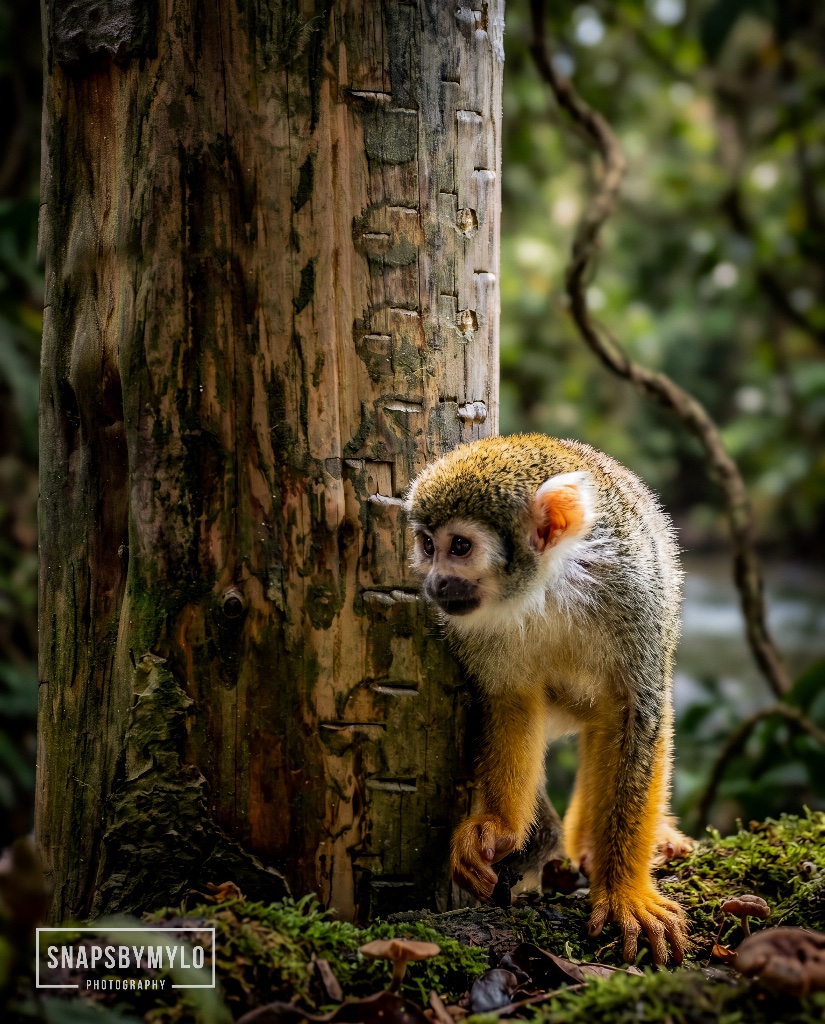
Saimiri (multiple species)
Squirrel Monkey
There are several species of squirrel monkey in the genus Saimiri. Most are classified as Least Concern, though the Central American squirrel monkey is Vulnerable and all species face pressure from habitat loss and the illegal pet trade.
Conservation Status
The squirrel monkey genus (Saimiri) comprises several species found across the tropical forests of Central and South America. The Common squirrel monkey (Saimiri sciureus), native to the Amazon Basin and Guyanas, is classified as Least Concern on the IUCN Red List, as is the Black-capped squirrel monkey (Saimiri boliviensis). However, not all species fare as well. The Central American squirrel monkey (Saimiri oerstedii), found in fragmented populations along the Pacific coast of Costa Rica and Panama, is classified as Vulnerable, with an estimated population of fewer than 5,000 mature individuals. The Black squirrel monkey (Saimiri vanzolinii), restricted to a small area of flooded forest in the Mamirauá Sustainable Development Reserve in the Brazilian Amazon, is also classified as Vulnerable due to its extremely restricted range. The species was only recognised as distinct in 1985. The Collins' squirrel monkey (Saimiri collinsii) of the southern Amazon is classified as Least Concern but faces increasing pressure from deforestation. Squirrel monkeys are among the most commonly kept primates in captivity, both in zoos and historically in biomedical research, which has led to concerns about the sustainability of wild capture in some regions.
Primary Threats
Habitat loss and fragmentation are the primary threats to squirrel monkeys, as they are to most Neotropical primates. Deforestation in the Amazon for cattle ranching, soy cultivation, and infrastructure development has destroyed vast areas of squirrel monkey habitat. In Central America, the conversion of tropical forest to agricultural land — particularly banana and palm oil plantations — has severely fragmented Saimiri oerstedii habitat, isolating small populations that are vulnerable to inbreeding and local extinction. The illegal pet trade is a significant threat — squirrel monkeys are small, visually appealing, and relatively easy to capture, making them one of the most trafficked primate species in South America. They are captured as infants for the exotic pet market, and the mother is typically killed in the process. Historically, squirrel monkeys were heavily used in biomedical research — tens of thousands were exported from South American countries to research laboratories in the United States and Europe between the 1950s and 1970s. While international trade for research has been largely curtailed by CITES regulations, illegal capture for both the pet trade and unregulated research continues in some areas. Hunting for bushmeat occurs in some regions, though squirrel monkeys are not primary bushmeat targets. Climate change and the increasing frequency of droughts in the Amazon threaten to alter the flooded forest ecosystems on which some species, particularly Saimiri vanzolinii, depend.
Ecological Role
Squirrel monkeys play an important role in tropical forest ecosystems as both seed dispersers and insect regulators. They are omnivorous, feeding on a wide variety of fruit, insects, spiders, bird eggs, and small vertebrates — in fact, insects can make up a significant portion of their diet, particularly during the dry season when fruit is less abundant. By consuming large quantities of fruit and dispersing seeds through their droppings, they contribute to forest regeneration and plant diversity. Squirrel monkeys are also prey for a variety of predators, including large raptors (such as harpy eagles), snakes (including boa constrictors), and felids (such as ocelots and jaguars). They live in large social groups — sometimes numbering over 100 individuals — and their presence in a forest is an indicator of ecosystem health. They are known to associate with other primate species, such as capuchin monkeys, for mutual predator detection, benefiting both species through increased vigilance.
Conservation Efforts
Squirrel monkeys are listed on CITES Appendix II, which regulates international trade to ensure it does not threaten wild populations. The Central American squirrel monkey (Saimiri oerstedii) benefits from protection within Costa Rica's extensive national park system, including Manuel Antonio National Park and Corcovado National Park, which protect some of the most important remaining habitat. Costa Rica has been a leader in reforestation and forest connectivity — the country has doubled its forest cover since the 1980s, and biological corridors are being established to reconnect isolated squirrel monkey populations. The Black squirrel monkey (Saimiri vanzolinii) is almost entirely confined to the Mamirauá Sustainable Development Reserve in the Brazilian Amazon, a protected flooded forest area managed in partnership with local communities — this reserve is critical to the species' survival. Organisations such as the World Wildlife Fund (WWF), Conservation International, and the Wildlife Conservation Society work on Amazonian forest conservation that benefits squirrel monkey habitat. In Costa Rica, organisations such as the Sloth Institute and local conservation groups work on habitat connectivity and primate rescue. Captive breeding programmes in accredited zoos maintain genetically managed populations as a safeguard, and rehabilitation centres in South and Central America rescue and rehabilitate confiscated pets and injured individuals for potential reintroduction.
How to Help
Supporting tropical forest conservation organisations, advocating for stronger enforcement of wildlife trade laws, and never purchasing primates or primate parts as pets all contribute to squirrel monkey conservation. Choosing sustainably sourced products — particularly those certified by the Rainforest Alliance or equivalent schemes — helps reduce the pressure of agricultural expansion on tropical forests. Supporting reforestation and biological corridor programmes in Central America is especially important for the Central American squirrel monkey, whose survival depends on reconnecting its fragmented populations. Raising awareness about the cruelty and illegality of the primate pet trade is also critical.
Conservation Charities
Organisations working to protect squirrel monkeys. Visit their websites to learn more or support their work.