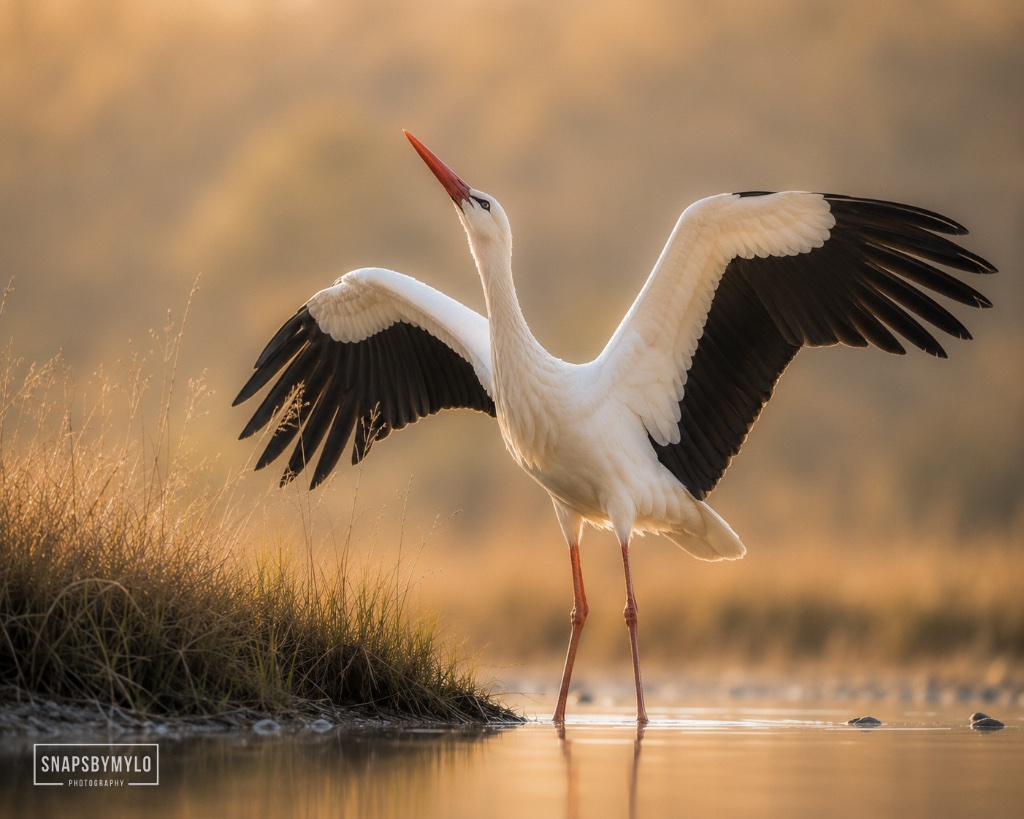
Ciconia ciconia
White Stork
The White Stork is classified as Least Concern with an increasing global population, though it faces regional threats from habitat loss, power line collisions, and climate-driven changes to migration.
Conservation Status
The White Stork (Ciconia ciconia) is classified as Least Concern on the IUCN Red List, with a global population estimated at over 700,000 individuals. The species has shown a population increase over recent decades, particularly in Western Europe, where storks have benefited from reintroduction programmes and changing nesting habits — many now nest on buildings, chimneys, and man-made nesting platforms rather than in trees. The European population is estimated at approximately 225,000–241,000 pairs. However, the species experienced a dramatic decline in the mid-20th century — in the 1980s, the Swiss breeding population was reduced to fewer than 10 pairs, and the French population was similarly decimated. The recovery since then has been one of the most successful bird conservation stories in Europe.
Primary Threats
White Storks are long-distance migrants, travelling between European breeding grounds and sub-Saharan African wintering grounds — a journey of up to 10,000 km — which makes them vulnerable to threats along the entire flyway. They avoid crossing the Mediterranean Sea and instead use narrow straits such as Gibraltar and the Bosphorus, where they concentrate in enormous flocks. Collisions with overhead power lines are a documented cause of mortality, as storks are large birds with limited manoeuvrability — studies in France and Spain have documented significant mortality at power lines along migration routes. Drought and desertification in the Sahel region of Africa reduce the availability of locusts and other insect prey during wintering, and the severe Sahel droughts of the 1970s and 1980s caused massive stork mortality. The drainage of wetlands and intensification of agriculture reduce foraging habitat in breeding areas — the shift from traditional hay meadows to monoculture crops has reduced the availability of the insects and small amphibians that storks feed on. Historically, the use of persistent pesticides such as DDT caused significant declines, which have largely reversed since these chemicals were banned.
Migration and Behaviour
White Storks are soaring birds that rely on thermal updrafts to gain altitude during migration, which means they cannot fly over large bodies of water where thermals do not form. This constrains them to narrow land bridges for crossing between continents. Storks are highly faithful to their nesting sites and often return to the same nest year after year, with nests that can weigh over 500 kg and be used for decades. Increasingly, some stork populations in southern Europe have stopped migrating altogether, taking advantage of year-round food supplies from landfill sites and artificial feeding. This shift from migratory to resident behaviour is a notable behavioural change that may have long-term implications for population dynamics.
Conservation Efforts
White Storks benefit from a high level of public affection and legal protection across their European range — they are culturally significant in many countries, particularly Germany and Poland, where they are associated with good fortune. Conservation measures include the installation of nesting platforms on poles and rooftops, the retrofitting of power lines with bird-flight diverters, and the protection of key wetland feeding sites. The Agreement on the Conservation of African-Eurasian Migratory Waterbirds (AEWA), administered by the UNEP, provides a framework for international cooperation on stork conservation across the entire flyway. Reintroduction programmes in Switzerland, France (particularly in Alsace), and Germany have successfully re-established breeding populations — the Swiss programme, begun in 1948, involved breeding storks in captivity and releasing them, and has helped the population recover to over 400 pairs. The EuroNatur Foundation works specifically on the protection of the Eastern European migration route, which passes through the Balkans and is critical for the species.
How to Help
Supporting wetland conservation organisations, advocating for the retrofitting of power lines with bird-flight diverters, and protecting traditional meadow farming practices that maintain stork foraging habitat all contribute. International cooperation on migratory bird protection through frameworks like AEWA is essential, as threats in wintering grounds in Africa can undermine conservation efforts in European breeding areas.
Conservation Charities
Organisations working to protect white storks. Visit their websites to learn more or support their work.