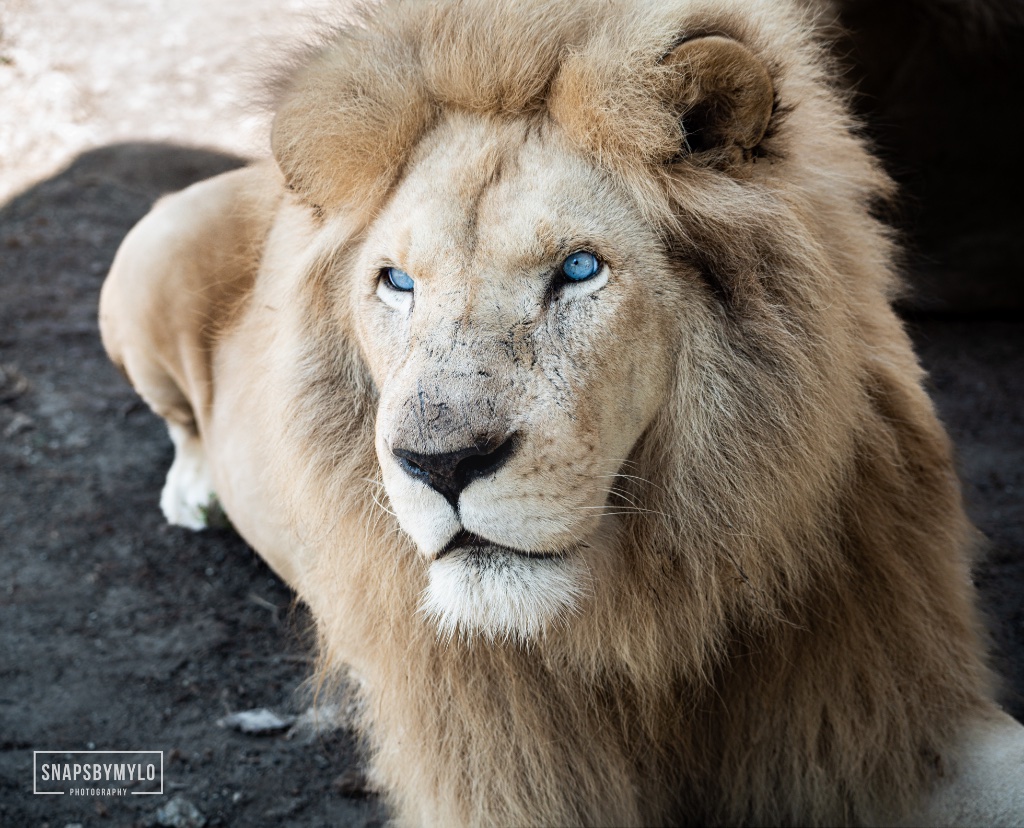
Panthera leo (leucistic variant)
White Lion
White lions are not a separate species but a rare colour variant of the African lion. The African lion is classified as Vulnerable, with populations declining across much of its range.
What Is a White Lion?
White lions are not albinos. Their colouration is caused by a recessive leucistic mutation that reduces pigmentation in the fur but leaves the eyes and skin with normal colouring. They are native to the Greater Timbavati and southern Kruger regions of South Africa, where they have been documented in the wild for centuries — local indigenous communities, including the Tsonga and Shangaan peoples, regard white lions as sacred. They are not a separate species or subspecies — they are African lions (Panthera leo) carrying this genetic variant. Both parents must carry the recessive gene for a white cub to be born. White lions can survive in the wild, contrary to earlier beliefs that their colouration would be a disadvantage for hunting; they have been observed hunting successfully in the Timbavati region.
Conservation Status
The IUCN Red List classifies the lion species (Panthera leo) as Vulnerable. Lion populations across Africa have declined by approximately 43% over three lion generations (approximately 21 years). Current estimates suggest roughly 23,000 lions remain in the wild in Africa, down from an estimated 200,000 a century ago. Lions have been extirpated from approximately 80% of their historic African range and now exist in only 25 countries, with populations in many of these countries numbering fewer than 1,000 individuals. White lions specifically are not separately assessed by the IUCN, as they are a colour variant rather than a distinct taxon. There are no reliable estimates of white lion numbers in the wild, as they occur naturally only in a small region of South Africa and were functionally removed from the wild in the 1990s before reintroduction efforts began.
Primary Threats
Lions face habitat loss and fragmentation as human populations expand into savanna landscapes. The conversion of wild land to agriculture and settlements reduces and isolates lion territories, cutting off migration and gene flow between populations. Retaliatory killing for livestock predation is a significant driver of decline — lions that kill cattle or goats are often poisoned or shot by pastoralists, and this is now one of the leading causes of lion mortality. Depletion of natural prey species through bushmeat poaching forces lions to prey on livestock, creating a cycle of conflict. Trophy hunting remains legal in several African countries and is a subject of intense conservation debate — proponents argue it generates revenue for conservation, while opponents contend it can destabilise pride structures. For white lions specifically, there has been a history of selective captive breeding and removal from the wild for display in zoos and for the lucrative 'canned hunting' industry in South Africa, where captive-bred lions are released into enclosed areas to be shot. The South African government announced in 2021 its intention to end the captive lion breeding industry, though implementation is ongoing.
Ecological Role
Lions are apex predators and play a crucial role in regulating prey populations. By controlling the numbers of large herbivores such as zebras, wildebeest, and buffalo, they prevent overgrazing and help maintain the balance of grassland ecosystems. The presence of lions also influences the behaviour of their prey, affecting grazing patterns and vegetation dynamics across the landscape. The removal of lions can trigger trophic cascades — the unchecked growth of herbivore populations can lead to overgrazing, soil erosion, and the loss of plant biodiversity. Protecting lions therefore protects entire savanna ecosystems.
Conservation Efforts
The Global White Lion Protection Trust (WLT), founded in 2002 by Linda Tucker, works to protect white lions in their natural endemic habitat in the Timbavati region through land stewardship and a reintroduction programme that has successfully established prides of white lions on protected reserves. Broader lion conservation efforts include the Lion Recovery Fund, Panthera's Project Leonardo (which works across lion range countries on anti-poaching, conflict mitigation, and population monitoring), and the African Lion and Environmental Research Trust (ALERT). South Africa's Kruger National Park and the broader Greater Limpopo Transfrontier Conservation Area provide critical protected habitat for lions, including white lions, in the wild. The Lion Conservation Initiative coordinates range-wide research, and the IUCN Cat Specialist Group maintains the African Lion Database to track population trends across the continent. Community-based programmes that build predator-proof bomas (livestock enclosures) and compensate herders for losses are proving effective at reducing retaliatory killing.
How to Help
Supporting reputable lion conservation organisations, advocating for the end of captive breeding and canned hunting, and choosing ethical wildlife tourism that does not support cub-petting or captive lion interactions all contribute to lion conservation. Consumers can also support initiatives that promote coexistence between communities and lions, such as those providing predator-proof livestock enclosures and compensation schemes.
Conservation Charities
Organisations working to protect white lions. Visit their websites to learn more or support their work.