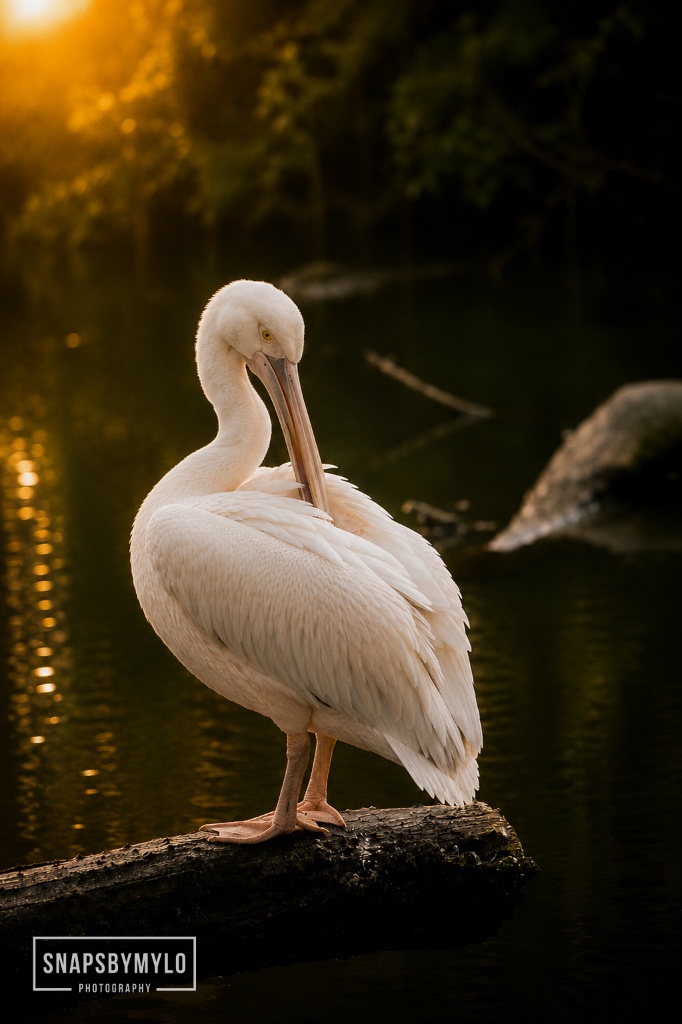
Pelecanus onocrotalus
White Pelican
The Great White Pelican is classified as Least Concern, but it depends on fragile wetland and lake habitats that face growing pressure from water abstraction, pollution, and disturbance.
Conservation Status
The Great White Pelican (Pelecanus onocrotalus) is classified as Least Concern on the IUCN Red List. The species breeds across a wide range spanning Eastern Europe (including the Danube Delta in Romania, Lake Prespa in the Balkans, and the Volga Delta in Russia) through the Middle East to Africa (including Lake Nakuru and Lake Naivasha in Kenya, and Lake Chad) and parts of Asia (including Kazakhstan and Mongolia). The global population is estimated at roughly 265,000 to 295,000 individuals. While the species is not globally threatened, certain regional populations are small, declining, and locally vulnerable — particularly those at the edges of the species' range in Europe and Central Asia. The European breeding population is estimated at approximately 5,500–8,000 pairs. In Africa, large breeding colonies are found at Lake Natron in Tanzania and the Lake Rukwa region. The species is on the European Red List of Birds, classified as Endangered in Europe.
Primary Threats
Great White Pelicans depend on large, shallow freshwater and brackish wetlands for breeding and foraging, and these habitats are among the most threatened ecosystems in the world. Water abstraction for irrigation and industry lowers water levels — in the Aral Sea basin, water diversion for cotton irrigation caused one of the worst environmental disasters in history, destroying a vast wetland ecosystem that once supported pelican populations. Agricultural runoff and industrial pollution degrade water quality and reduce fish stocks — eutrophication (nutrient pollution) can cause toxic algal blooms that kill fish and make wetlands unsuitable for pelicans. Disturbance at breeding colonies is a major concern — pelicans nest in large, ground-based colonies on islands or remote shorelines, and they are highly sensitive to human disturbance. A single disturbance event — whether from fishermen, tourists, low-flying aircraft, or military activity — can cause entire colonies to abandon their nests, leaving eggs and chicks to die. Fishing nets cause entanglement mortality — pelicans diving for fish can become trapped in gill nets and drown. Collisions with power lines are a documented threat along migration routes. The draining of wetlands for agriculture and development has eliminated vast areas of pelican habitat across their range. Climate change is altering the hydrology of wetland systems, with droughts reducing the extent and depth of critical breeding and feeding sites.
Feeding and Behaviour
Great White Pelicans are among the largest flying birds in the world, with a wingspan of up to 3.6 metres and weighing up to 11 kg. They feed primarily on fish and are known for their cooperative feeding behaviour — groups of pelicans may swim in a line or semicircle, beating their wings on the water surface to drive fish into shallow water where they can be more easily caught. They can consume up to 1.2 kg of fish per day. They are also known to sometimes feed on the young of other birds, amphibians, and small mammals. Great White Pelicans are migratory, travelling between breeding grounds in Eastern Europe and Central Asia and wintering areas in Africa and South Asia. Some African populations are resident year-round. Their large size and colonial nesting make them dependent on undisturbed, fish-rich wetland systems, which are increasingly scarce.
Conservation Efforts
The Great White Pelican is protected under the Agreement on the Conservation of African-Eurasian Migratory Waterbirds (AEWA), which coordinates international action across the species' flyway and requires signatory countries to protect breeding sites and maintain wetland habitat. Key breeding sites are protected as Ramsar Wetlands of International Importance, including Lake Prespa (shared between Greece, Albania, and North Macedonia — one of the most important pelican breeding sites in Europe), the Danube Delta in Romania (the largest wetland in Europe and home to roughly half the European breeding population), and Lake Ichkeul in Tunisia. Conservation measures focus on protecting colony sites from disturbance through buffer zones and access restrictions, maintaining the hydrological integrity of key wetlands, and reducing bycatch from fishing gear. The Hellenic Ornithological Society (BirdLife Greece) and the Romanian Ornithological Society (SOR) conduct long-term monitoring and management of key European pelican colonies. Artificial nesting platforms have been installed at some sites to create additional nesting habitat. The WWF works on wetland conservation across the species' range, with particular focus on the Danube Delta and Lake Prespa.
How to Help
Supporting wetland conservation organisations, advocating for the protection and restoration of wetland ecosystems, and reducing water consumption all contribute. Supporting responsible tourism that maintains appropriate distances from breeding colonies is important. International cooperation on wetland conservation through frameworks like the Ramsar Convention and AEWA is essential, as the species depends on a network of sites across multiple countries.
Conservation Charities
Organisations working to protect white pelicans. Visit their websites to learn more or support their work.