Photographing Snowy Owl
Introduction
Snowy Owls don't hide from you. That's what makes them both accessible and deceptive. You think you've got the shot, but standing at distance with a clear line of sight is not the same as understanding what you're looking at. These birds carry an extraordinary stillness — the kind that makes you forget time passes. But beneath that composure is a precision predator reading the landscape at a frequency you can barely perceive. Learning to photograph a Snowy Owl well means learning to slow down to their pace, read their posture before they move, and let the environment do half the compositional work for you.
Understand the Animal
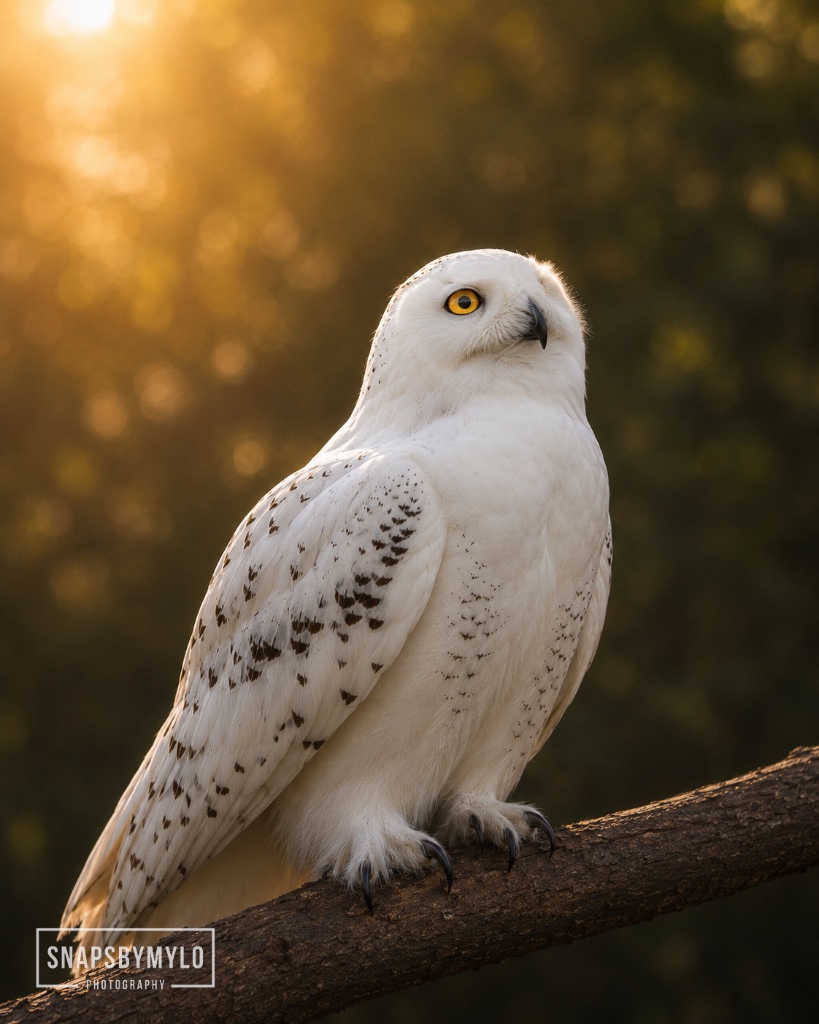
Snowy Owls are diurnal — they hunt openly in daylight, which is unusual among owls and entirely connected to their Arctic origins where summer sun never sets. When you find one perched, resist the immediate urge to raise your camera. Watch first. Posture tells you almost everything. A Snowy Owl sitting bolt upright, neck extended, eyes wide and fixed — that bird is alert. It has seen or heard something. Stay still. Something is about to happen. Contrast that with a bird sitting low and rounded, feathers slightly puffed, eyes half-closed — that's a resting bird and it may sit that way for an hour. Neither state is better for photography. Both require different kinds of patience. Head movement is your clearest behavioural cue. Snowy Owls rotate their heads with deliberate, mechanical precision — each turn a calculation. When the head drops slightly and locks onto a fixed point in the grass or snow, the bird is targeting. This is the moment to be ready. The launch from a perch is explosive and fast, but the pre-launch focus is slow and readable if you're watching. On the ground, Snowy Owls are more vulnerable and more cautious. They land heavily, pin prey with their talons, and will often mantling — spreading their wings low over a kill to shield it. This instinctive behaviour is brief and extraordinary. It happens within seconds of a successful strike. Males are typically whiter than females, who carry heavier dark barring across the chest and back. Young birds are the most heavily marked. The bird in golden-hour light with distinct dark mottling against white plumage is almost certainly a female or a younger bird — and that contrast of warm amber bokeh against cool white and dark barred feathers is a combination the light almost creates for you. Wind matters. Snowy Owls face into the wind — always. Their facial disc acts as a parabolic receiver, and wind from behind disrupts their hearing. Knowing wind direction tells you where the bird will orient, which tells you where the light will fall on their face. This isn't luck. This is observation.
Look Before You Shoot
Before you move into position, stand back and read the entire scene. Not just the bird — everything around the bird. What is the background doing at this distance? A thick line of trees fifty metres behind a perched owl can render as a smooth wall of colour in soft light. Move ten metres left and that same background becomes a broken tangle of branches cutting through your subject. The bird hasn't moved. You have. And the image is completely different. Light direction relative to the owl's face should drive your positioning. Snowy Owls have forward-facing eyes set deep into a flat facial disc. Front light — or a slight angle to it — illuminates both eyes evenly and brings out the intensity of that yellow iris. Backlight can create beautiful rim-lit shots when the white plumage glows, but you will often lose the eye detail that defines a Snowy Owl portrait. Golden hour on an open field in winter is one of the great convergences in wildlife photography. The warm amber tones of low sun play directly against the cool, high-key whites of the owl's plumage. The contrast is natural and immediate. Position yourself with the sun low and behind you, angled toward the bird's face. Approach matters as much as positioning. Move parallel to the bird rather than directly toward it. Direct approach reads as predator behaviour to almost any wild animal. Slow lateral movement is less threatening. Watch for the bird's alert posture to signal you've reached the edge of their comfort zone — and stop there. The photograph you make from that respectful distance, with the bird relaxed and unaware, will always be stronger than any image taken from a position that puts the animal under stress.
Composition Ideas
The Locked Gaze
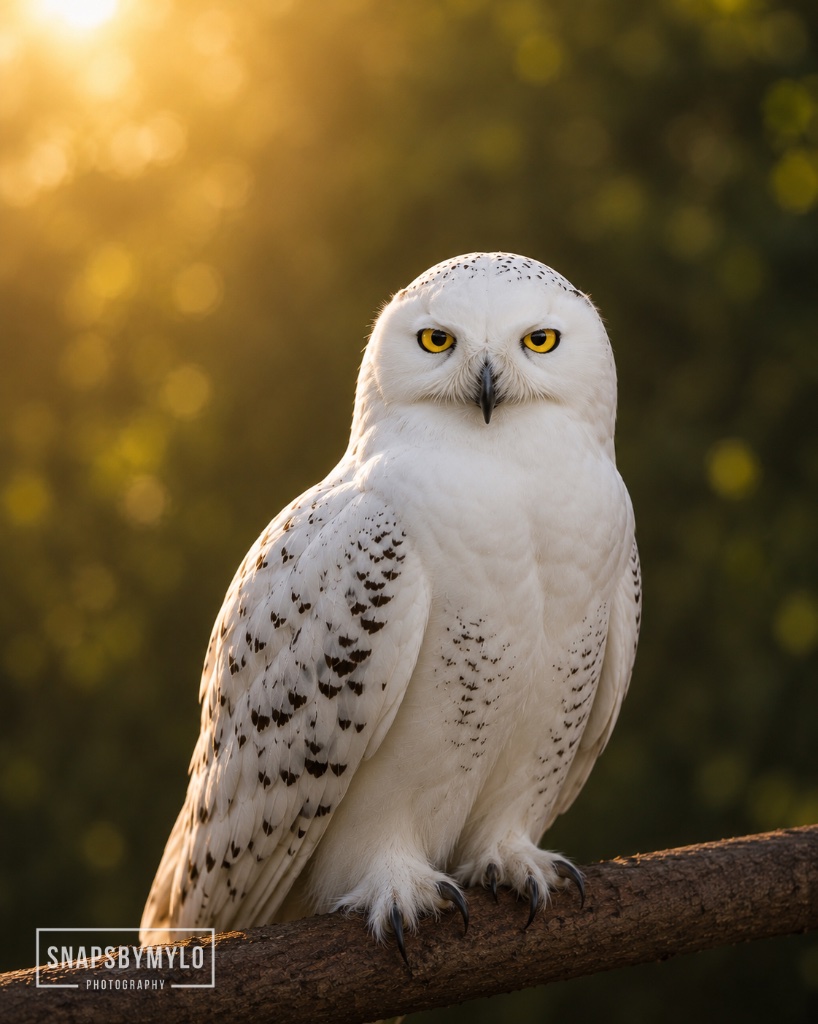
Look for: The owl facing directly toward you, both yellow eyes open and level, neck slightly extended in alert posture.
Why it works: Direct eye contact with a Snowy Owl creates an immediate, almost confrontational connection with the viewer. Those yellow eyes carry enormous visual weight against pale plumage, and a central or near-central composition amplifies the intensity without distraction.
Perch Against Open Sky
Look for: The bird elevated — on a fence post, wooden stake, or bare branch — with open sky as the dominant background.
Why it works: Negative space in a pale winter sky lets the bird's form read with complete clarity. The silhouette of a Snowy Owl against blue or pale grey sky is one of the cleanest compositions available in northern fields. Simplicity is the point.
The Head Turn
Look for: The owl mid-rotation, head turned 90 degrees or more to the side, profile visible, while the body remains forward-facing.
Why it works: The disconnect between a still body and a fully rotated head is physically startling. It creates a tension in the frame — the owl's attention is elsewhere, in a direction your eye is drawn to follow. It implies a world beyond the frame.
Low and Level — Ground Portrait
Look for: Getting physically low to shoot at the bird's eye level when it is perched on a low post, stump, or directly on snow.
Why it works: Shooting level with your subject collapses the power dynamic of the image. Instead of looking down at a bird, you are meeting it. The background compresses into soft colour rather than reading as flat ground, and the owl fills the frame with authority.
Plumage Detail — Pattern Against Pattern
Look for: Close framing on the chest and face when the bird is relaxed, revealing the full barred patterning of the feathers.
Why it works: The dark mottling on a female or young Snowy Owl has remarkable graphic quality — almost like brushwork. Tight framing that fills the frame with feather detail removes environmental context and turns the image into something almost abstract and textural.
Environmental Context — Bird in Landscape
Look for: Pulling back to show the owl as a small, bright form within a wide winter field, snowy treeline, or open tundra-like terrain.
Why it works: Snowy Owls are built for open country. A wider frame tells that story. A small white form in a vast field communicates something no close portrait can — the scale of the terrain this bird patrols and the solitude of its existence.
Golden Hour Rim Light
Look for: Positioning yourself so the low sun catches the outer edge of the owl's white plumage from behind or to the side, creating a warm glow along the feather edges.
Why it works: White plumage in low-angle backlight becomes luminous. The warm amber rim against a cooler background gives the bird a three-dimensional quality — it appears to lift off the frame. The bokeh behind the bird takes on the same warm tones as the light, creating tonal harmony throughout the image.
The Pre-Launch Lean
Look for: The bird crouching slightly on its perch, wings beginning to lift from the body, weight shifting forward — the moment just before flight.
Why it works: Anticipating the launch rather than photographing the flight itself gives you a frame loaded with potential energy. The bird is coiled. Nothing has happened yet, but everything is about to. That tension is often more compelling than the action itself.
Snowfall Frame
Look for: Light falling snow in front of the bird, visible as soft out-of-focus white specks moving through the foreground.
Why it works: Falling snow in the foreground adds atmosphere and a sense of place that immediately signals the world this bird belongs to. It also adds a painterly, layered quality to the image — the owl exists within the weather, not separate from it.
Eyes in Shadow — The Silhouette Approach
Look for: The bird backlit, plumage glowing white but face falling into shadow, form dominant over detail.
Why it works: Used intentionally, shadow across the face removes the focal point the viewer expects and forces attention onto the bird's shape and posture. It becomes a study in form rather than a portrait. Not every Snowy Owl image needs to show the eyes — knowing when to break that rule is part of developing compositional instinct.
Moments Worth Waiting For
- —Direct eye contact — both eyes open, level, and aimed precisely at your lens
- —The head drop-and-lock before a hunting strike — neck pulled back, face angled down toward prey
- —Launch from perch — wings spreading open in the first explosive second of flight
- —Mantling over prey on the ground — wings spread low and wide, shielding a fresh kill
- —A full 180-degree head rotation — body still, face looking directly backward
- —Preening — the bird working its beak through wing feathers, exposing the underside of a spread wing
- —A slow blink or full eye closure in a relaxed bird — vulnerability and stillness combined
- —Snow landing — the bird descending onto open snow, wings fully extended, talons forward, just before touchdown
- —Vocalisation — an open beak, the rare visible call, brief and unexpected
- —Two birds in frame — mate pairs in late winter perching near one another, one facing each direction
Field Notes
What I noticed
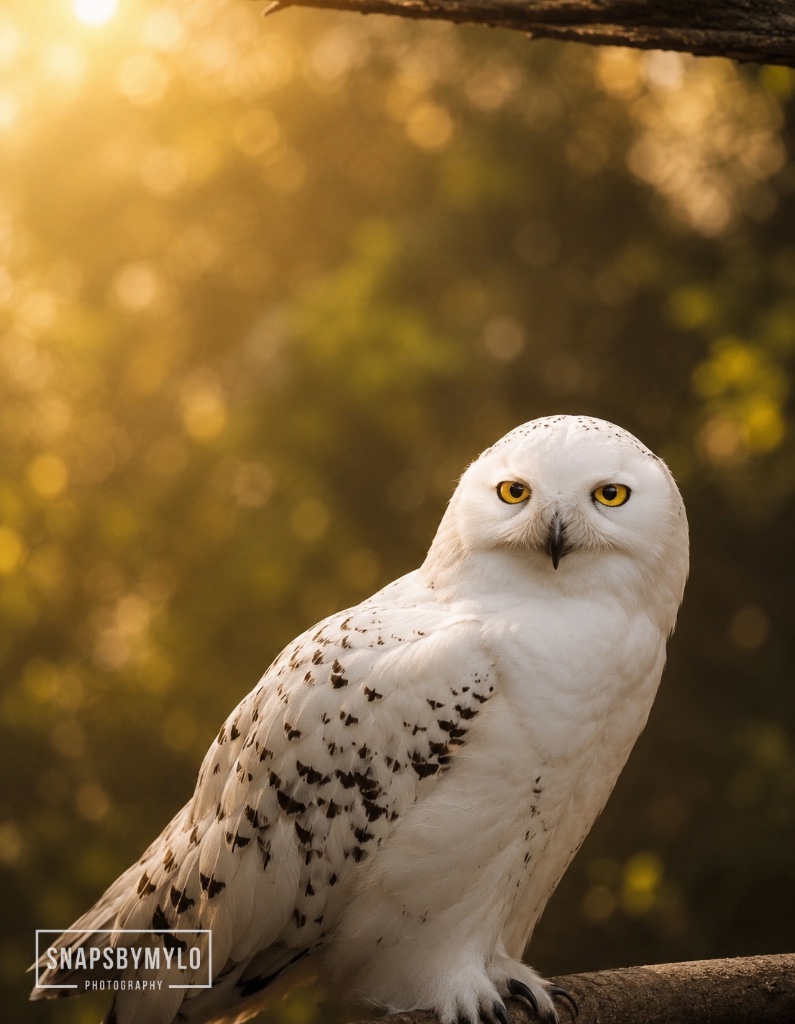
She had been sitting on that branch for nearly forty minutes before I arrived. By the time I'd worked my way into position — moving slowly, staying low — her posture had already told me she was settled. Feathers slightly puffed, eyes at half-mast. She wasn't hunting. She was resting. I stopped moving and waited. The mottled barring across her chest was rich and graphic against the pale plumage, and the golden hour was already beginning to shift the background trees into that deep amber warmth.
What I waited for
The eye open. That slow, full opening of both yellow eyes when she came back to full alertness. I'd watched her drift in and out of a half-rest for twenty minutes. When she lifted her head and both eyes came fully open and locked forward — that was the frame. Not a movement frame. A stillness frame. The kind of presence that only a fully alert, completely relaxed bird produces when it decides to look directly at you.
What I ignored
Two other photographers arrived partway through and set up further down the field. I ignored the temptation to reposition when they got a flight shot I didn't. Chasing action that has already happened puts you in the wrong place for what comes next. She landed back on the same branch. I was already there.
What created the strongest image
The background. The trees behind her had gone from busy and distracting to a wash of warm amber as the light dropped. I hadn't moved. The light did the work. That golden bokeh against the cool white and dark barred plumage created a colour contrast I couldn't have planned — I could only have been patient enough to still be there when it happened.
Conservation Insight
Snowy Owls are currently listed as Vulnerable on the IUCN Red List, with population estimates significantly revised downward in recent years. Their dependence on lemming cycles makes them acutely sensitive to climate-driven disruptions in Arctic ecosystems. Warming tundra, shifting prey availability, and increasing pressure on wintering grounds all factor into their long-term survival. When you photograph a Snowy Owl, you are documenting a species under genuine pressure. Keep your distance. Never flush a bird from its perch for a flight shot. The image is never worth the cost to the animal.
Instagram Feed Cover
Photographs of Snowy Owl
Fine art prints available in limited and open editions.