Photographing Zebra
Introduction
Zebra are deceptively difficult to photograph well. The stripes draw the eye immediately — bold, graphic, impossible to ignore — but that same visual intensity can flatten an image if you let it. What makes zebra genuinely rewarding to photograph is the contradiction they present: an animal that looks almost abstract up close, yet deeply alive when you catch the right moment. They are social, expressive, and restless. They telegraph their moods clearly if you know what to watch for. Spend enough time with a herd and you stop seeing pattern — you start seeing personality. That shift is where the stronger photographs begin.
Understand the Animal
Zebra live by a rhythm. They graze, move, pause, scan, graze again. Understanding that rhythm is the foundation of anticipating any worthwhile moment. Within a herd, hierarchy is visible if you look for it. Dominant stallions position themselves at the edges — not always at the front, but at the perimeter where threats approach first. They stand differently to the rest of the herd. The posture is broader, the head carriage higher. When a stallion moves with purpose rather than grazing drift, something is happening. Follow him. Mares with foals cluster toward the centre of a moving group. Foals are impulsive — they sprint, double back, stumble into poses that last half a second. You cannot plan for a foal. You can only be ready. The ears tell you almost everything. Both ears forward means the animal is alert and focused on something specific — something it has decided is worth watching. Ears relaxed and angled outward means it is calm, grazing, not thinking about anything in particular. One ear forward and one back means divided attention — transitional, unpredictable. This is often the moment just before movement. Tail swishing accelerates before the animal walks on. A foot stomp, a skin twitch across the flank, a slight raise of the head from grazing — these are departure signals. When you see them, the animal is about to leave its current position. Decide quickly whether to stay or move. At water, behaviour changes entirely. Zebra approach water cautiously, often stopping short of the bank to scan for several minutes. They are acutely aware at the waterhole. The head drops slowly and deliberately, eyes still scanning sideways as they drink. This produces one of the best angles available — the profile of a drinking zebra with its neck extended, water disturbed, full concentration on the act. Grooming pairs are worth enormous patience. Two zebra standing nose to tail, working their teeth along each other's withers and neck, will hold the position far longer than you expect. The angle shifts gradually as they work deeper into the scratch. The expressions — eyes half-closed, lips loose, ears soft — photograph beautifully when the light finds the face cleanly. In dry season, as grazing thins, herds become more mobile and more compressed. Dusty movement photographs emerge from this period — bodies pressing together, legs overlapping through the haze. In wet season, the contrast shifts: green against black and white, animals spread out, calmer.
Look Before You Shoot
Before you raise your camera, spend five minutes doing nothing but watching. This is not wasted time — it is the work. Read the scene as a whole first. Where is the light falling? What is the background made of? A clean, shadowed treeline behind a sunlit zebra is a completely different image to the same animal shot against a cluttered, bright skyline. The stripes demand a background that does not compete. Dust, dark soil, dry grass, open shadow — these work. Busy vegetation at the same tonal value as the stripes will collapse the image into noise. Consider where the animal is heading, not just where it is. Zebra rarely stay still for long, especially solitary animals or small groups moving between grazing areas. If you position yourself based on where they are now, you will often be slightly wrong by the time you shoot. Watch the direction of travel, watch the head orientation, and place yourself ahead of that line. Light direction matters here more than with most animals. The stripe pattern is already high contrast — add hard frontal light and you lose depth. Side light, coming from roughly 45 degrees, is what gives the body volume and makes the black genuinely black and the white genuinely white. In bright midday sun, the shadow falling across a zebra's own body from the stripe geometry creates texture that flat light simply cannot. That shadow is an asset. Work with it. Patience in this context means positioning and then committing. Find your background, establish your distance, identify the likely path of movement, and wait for the animal to walk into the frame you have already built. The photograph in your mind exists before you take it. Your job is to hold that vision clearly while the animal decides, on its own terms, whether to give it to you.
Composition Ideas
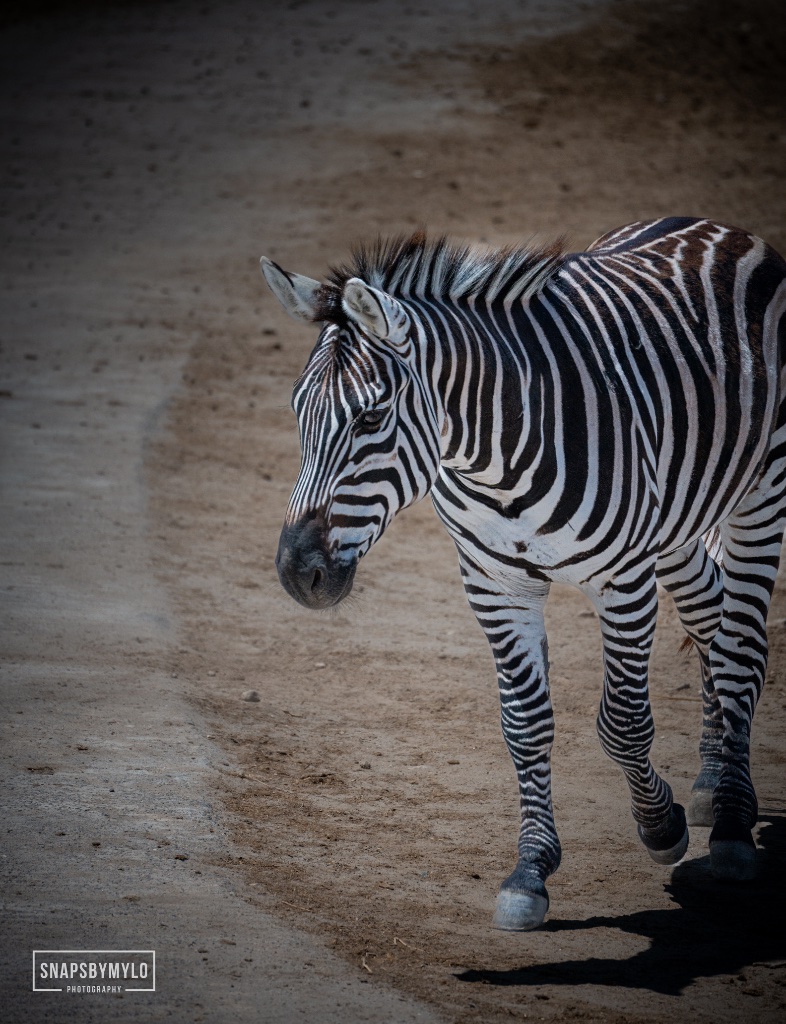
The Profile Walk
Look for: A zebra moving laterally across your position, ideally on open ground with a clean, uncluttered background. Full body visible, mid-stride so at least one leg is extended forward.
Why it works: The stripe pattern runs perpendicular to the direction of travel, creating a strong horizontal rhythm that reads immediately. Movement is implied by the stride. The profile is the most graphic rendering of this animal — it is the view that makes the pattern make sense.
Shadow and Stripe
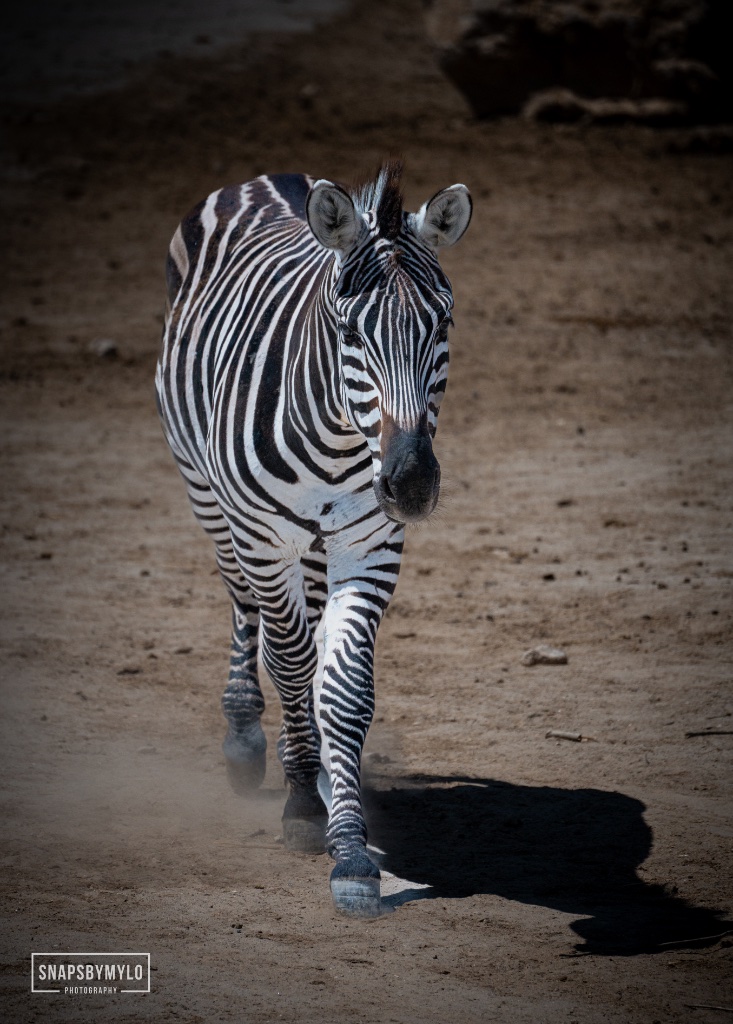
Look for: Hard directional sunlight casting the animal's own shadow onto pale dust or dry earth. Look for the shadow to echo the stripe pattern on the ground beside or beneath the animal.
Why it works: The repetition of the stripe motif in the shadow extends the graphic quality of the image beyond the animal itself. The ground becomes part of the composition. This works particularly well in mid-morning or mid-afternoon light on open, pale ground.
The Drinking Profile
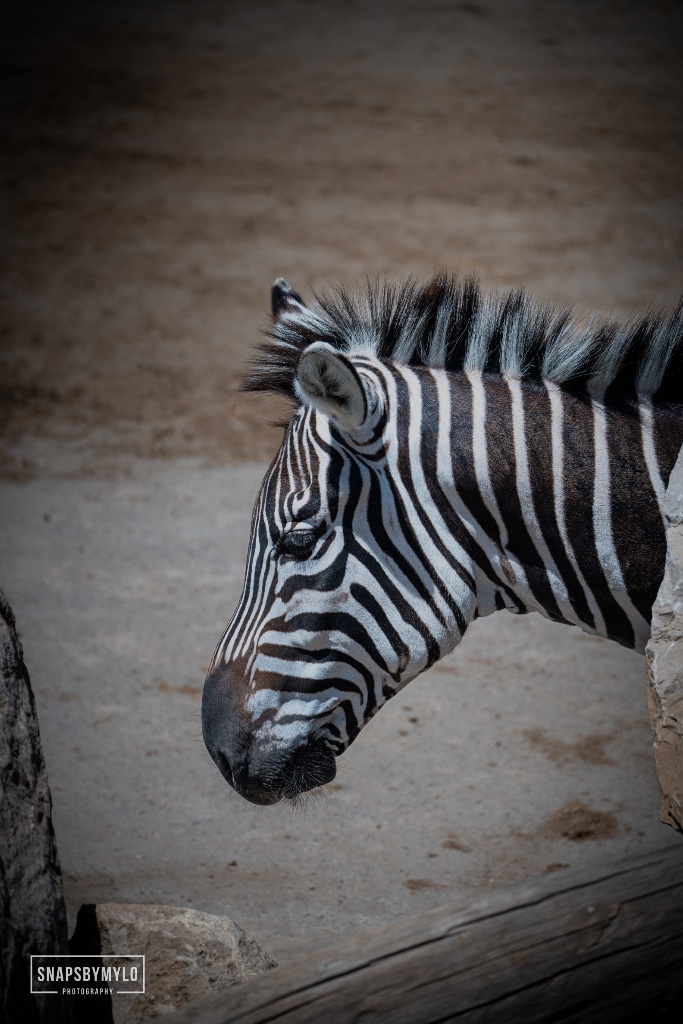
Look for: A zebra at water with neck fully extended downward, head angled sideways so the eye is visible. Water surface in the lower portion of the frame, ideally with some gentle disturbance.
Why it works: The curved neck creates a strong lead-in line through the frame. The eye, even in a drinking posture, anchors the image with life. The vulnerability of the posture — head down, exposed — adds tension that a standing portrait cannot achieve.
Mutual Grooming
Look for: Two zebra standing antiparallel — head to tail — working teeth through each other's mane or withers. Shoot from the side to capture both faces in the same frame.
Why it works: The visual symmetry of two stripe-patterned animals creates natural graphic balance. The expression of contact — lips working, eyes soft — brings intimacy to an otherwise bold subject. The antiparallel arrangement also means both sets of stripes run in opposite directions, which creates interesting visual tension.
Tight on the Eye
Look for: A calm, alert animal looking directly toward you or slightly past you. Fill the frame with the face — muzzle to ear. Look for catchlight in the eye and clean separation between the black stripe above the eye and the background.
Why it works: Zebra have large, dark, deeply set eyes that photograph with genuine intensity when the light finds them correctly. Filling the frame removes the distraction of the full stripe pattern and forces a single point of connection.
Herd Compression
Look for: A group of zebra bunched together in movement or at rest, bodies overlapping, stripes intersecting. Shoot from a slightly elevated angle if possible to flatten the depth and increase the pattern density.
Why it works: When stripes from multiple animals layer over each other, the individual animal dissolves and the image becomes almost abstract. This is one of the most visually arresting ways to photograph zebra — leaning into the confusion of the pattern rather than fighting it.
Dust and Movement
Look for: A moving herd in dry conditions where hooves are kicking up fine dust. Look for backlight or strong sidelight to illuminate the dust cloud while the animals remain partially silhouetted within it.
Why it works: Dust wraps around the stripes and softens them, adding atmosphere and a sense of environment that a clean portrait cannot convey. The contrast between the sharpness of the nearest animal and the obscured animals behind creates natural depth.
The Lone Walker
Look for: A single zebra walking across an open, minimalist landscape — flat dust pan, short grass plain, cracked earth. Significant negative space on the side the animal is moving toward.
Why it works: Isolation amplifies the graphic quality of the stripe pattern. Without the visual context of a herd, the single animal reads differently — more considered, more deliberate. The negative space gives the movement somewhere to go within the frame.
Foal and Mother
Look for: A foal standing close alongside the mare, ideally with the foal's head level with the mare's shoulder or lower. Look for the size contrast and any moment of nose contact or nuzzling.
Why it works: The scale difference between mare and foal creates immediate visual hierarchy and emotional resonance. The juxtaposition of proportionally different stripe widths — broader on the adult, finer on the foal — gives the image unexpected graphic detail on closer inspection.
Ground Level Profile
Look for: Dropping your shooting position to ground level when an animal is walking across open ground. Wait for the legs to separate cleanly so there is space and light between them. Look for the horizon line to fall at or below belly height.
Why it works: A low angle transforms the familiar profile shot entirely. Legs become stronger compositional elements, the sky or distant landscape enters the frame beneath the belly, and the animal gains a sense of scale and presence that eye-level shooting rarely achieves.
Moments Worth Waiting For
- —A zebra breaking into a canter unprovoked — watch for the preceding head toss and back leg kick that signals the burst before it happens
- —Two stallions squaring off — chest to chest, ears flat, the moment before one breaks — this lasts only seconds but the tension in the posture is unmistakable
- —A foal dropping to roll in dust, legs in the air, completely exposed — it never lasts more than a few seconds
- —Direct eye contact from a stationary animal that has decided you are not a threat — held gaze, full stillness, genuine presence
- —A drinking zebra lifting its head mid-drink, water falling from the muzzle, scanning the opposite bank
- —The full body shake after a roll or after flies — the skin ripple that moves from shoulder to flank
- —A herd moving through low morning mist or dust haze, stripe patterns fading in and out of visibility at the back of the group
- —A zebra standing in the partial shade of an acacia, one side lit hard, the other side in deep shadow — the stripe pattern splitting cleanly between the two
- —Two animals resting with chins draped over each other's backs — a posture of complete relaxation that appears in the heat of midday
- —The moment a grazing zebra raises its head sharply and holds — every muscle still, every ear forward — before the herd responds and the mood changes entirely
Field Notes
What I noticed
The light was hard and coming from the left — midday-adjacent but slightly past it. The shadow the animal was casting onto the dirt path was almost as bold as the stripes themselves. What I kept returning to was the way the path — pale, dusty, compacted earth — almost disappeared beneath the animal's feet in the brightest patches of light. The stripes weren't just on the animal. They were everywhere the shadow fell.
What I waited for
I waited for the stride to open up — for one front leg to extend forward and one back leg to push off, so there was space between the legs and a genuine sense of movement in the posture. A zebra walking with all four legs stacked vertically beneath it looks static regardless of the moment. The extended stride is what confirms the walk. I also waited for the head to be level rather than raised or dipped — a level head in profile gives you the full geometry of the face without distortion.
What I ignored
Other animals in the background. There was a second zebra perhaps thirty metres back along the path, half-visible. I ignored it entirely. Bringing it into the frame would have introduced ambiguity about which animal the image was about. A single animal on a path has clarity. Two animals creates a question the image doesn't need to ask.
What created the strongest image
The combination of the pale dirt path and the hard shadow. The path gave the animal somewhere to exist — not floating in grass or obscured by vegetation, but on a surface that showed exactly where it was and where it was going. The shadow extended the stripe logic onto the ground beneath it. That felt honest to the light and the environment, and it gave the image a graphic quality that a softer background wouldn't have produced.
Conservation Insight
Plains zebra remain listed as Near Threatened, with populations declining across much of their range. Habitat fragmentation is the primary pressure — as land is converted for agriculture and fencing cuts traditional migration corridors, herds become isolated and access to water and dry-season grazing is restricted. The illegal wildlife trade adds further strain. They are not an animal in immediate crisis, which makes them easy to overlook in conservation conversations. That invisibility is its own kind of risk. Photographs that show these animals as specific, present, and alive — rather than generic background wildlife — matter.
Instagram Feed Cover
Photographs of Zebra
Fine art prints available in limited and open editions.