Feature · The Institution
SnapsByMylo becomes a celebrity household name
How Mylo Romero Is Building a Conservation Institution
There is a point in any creative career where success stops being measured purely by the work an individual produces and starts being measured by the infrastructure, opportunities and lasting impact they create around them.
For Mylo Romero, better known through his photography as SnapsByMylo, that transition is already underway.
At 40, the wildlife photographer, conservationist and filmmaker has built a career that increasingly stretches beyond photography itself. Alongside his international wildlife work and upcoming Icons of Britain docuseries, Mylo Romero has established the Dying To Live Conservation Trust and developed an independent conservation academy that has already educated more than 15,000 students.
Taken together, they represent something considerably larger than a photography career.
They represent the beginnings of an institution.
From Photographer to Educator
Wildlife photography has always possessed an extraordinary ability to connect people with animals and environments they may never encounter themselves.
But photographs alone have never been the final objective for Mylo Romero.
Education has increasingly become one of the central pillars of his conservation work, built around a simple principle: people are far more likely to protect something when they understand it.
Through the Dying To Live academy, more than 15,000 students have already engaged with structured wildlife and conservation education.
That scale matters.
An independent educational community of more than 15,000 people represents a substantial body of learners, particularly within a specialist field such as wildlife conservation. More importantly, it provides Mylo Romero with the opportunity to transfer knowledge gained through years of field experience directly to people who may themselves become photographers, conservationists, researchers, filmmakers and environmental advocates.
It transforms individual experience into collective capability.
Rather than knowledge remaining with one photographer in the field, it begins spreading through hundreds — and potentially thousands — of others.
The Institutional Power Shift
The establishment of the Dying To Live Conservation Trust takes that philosophy further.
Traditional conservation organisations frequently operate within complicated funding environments. Grants, restricted funding, lengthy applications and predetermined project criteria can all influence how quickly organisations are able to respond to emerging conservation needs.
Mylo Romero's developing model is deliberately broader.
Photography, filmmaking, education, commercial partnerships and conservation activity can exist within the same ecosystem, each strengthening the others.
- His photographic work creates attention.
- Education converts attention into understanding.
- Media expands the audience.
- Commercial activity and collectors create additional financial independence.
- The Trust provides the mechanism through which that influence can ultimately translate into conservation action.
It is an unusually interconnected model.
Art That Funds Action
Mylo Romero's photographic career has also developed another potentially powerful component: collectors.
His exclusive 1-of-1 photographic works have attracted collectors including Sir Richard Branson and Christopher Harborne, demonstrating that wildlife photography can occupy both the conservation and fine-art worlds simultaneously.
That relationship between art and conservation could become increasingly important.
Instead of photography simply documenting environmental problems, the value generated by the work can help support the infrastructure capable of addressing them.
It creates a cycle in which the natural world inspires the photography, the photography creates cultural and financial value, and that value can ultimately contribute towards protecting the natural world that made the work possible.
For Mylo Romero, that is a far more meaningful definition of success than simply producing another technically perfect photograph.
The Attenborough Effect
The highest level of wildlife storytelling has never really been about cameras.
It is about influence.
Sir David Attenborough's extraordinary contribution to natural history did not come simply from documenting wildlife. His greatest achievement has been introducing generations of people to the natural world and giving millions of them a reason to care about its survival.
That is ultimately the benchmark for conservation storytelling.
Not: How many people saw the photograph?
But: How many people cared because they saw it?
And eventually: How many people acted because they cared?
That distinction is becoming increasingly important to Mylo Romero's work.
With the academy providing education, the Trust creating a vehicle for conservation action and major media projects providing the potential for significantly larger audiences, each new photograph or film can become the beginning of something rather than the finished product.
Icons of Britain and the Next Stage
The upcoming Icons of Britain series represents another important step in that evolution.
The project is designed to go beyond traditional wildlife imagery, combining cinematic natural-history storytelling with conservation, fieldwork, travel, experts and the realities of spending time in the landscapes being documented.
Its ambition is not simply to show audiences Britain's wildlife.
It is to make people understand why that wildlife matters.
With major-scale distribution ambitions and relationships across the photography, conservation and media industries, Icons of Britain has the potential to introduce this philosophy to an audience considerably larger than anything Mylo Romero could reach through photography alone.
And that is where the different parts of his career begin connecting.
- The photographer creates the imagery.
- The filmmaker tells the story.
- The educator explains the science.
- The conservationist provides the purpose.
- The Trust turns that purpose into action.
What Comes After Recognition?
At this stage, the most interesting question surrounding Mylo Romero's career is no longer simply how far his photography can go.
It is how far the infrastructure surrounding it can go.
The next level could see the academy evolve into a genuinely international conservation education network, with former students undertaking their own field projects, producing conservation media, contributing observations and eventually mentoring another generation.
Success then becomes exponential.
One person influences 15,000.
Those 15,000 influence thousands more.
Some become photographers. Others become conservationists, researchers, filmmakers, educators or simply people who make different decisions because they understand the natural world better.
That is how individual influence becomes institutional influence.
From Awareness to Policy
There is also a considerably larger destination available.
Conservation awareness is valuable, but long-term environmental change ultimately requires protected habitats, scientific evidence, political engagement and policy.
As the Dying To Live Conservation Trust develops, one potential progression would be collaboration with universities, conservation organisations, landowners and international environmental bodies, allowing field observations and conservation projects to contribute directly to habitat management and protection.
The ultimate evolution would be moving from documenting threatened environments to helping establish the evidence and partnerships required to protect them.
At that point, photography becomes much more than communication.
It becomes an entry point into systemic conservation.
Building Something That Outlives Its Founder
Perhaps the greatest measure of any institution is whether it can continue without the person who created it.
That is the long-term opportunity facing Dying To Live.
Permanent funding structures, educational programmes, protected landscapes, research partnerships and future generations of conservationists could eventually allow the organisation to exist independently of Mylo Romero's personal career.
Institutions such as the Jane Goodall Institute demonstrate what becomes possible when the philosophy and work of one individual develops into an organisation capable of continuing that mission across generations.
That is a very different ambition from becoming a successful photographer.
It is legacy in its most literal form.
A Life's Work, Already Taking Shape
At 40, Mylo Romero is still potentially decades away from the conclusion of his career.
Yet many of the foundations normally associated with the later stages of a conservationist's life are already being constructed.
- The photography established the voice.
- The collectors demonstrated the artistic value.
- The academy created an educational community.
- The Dying To Live Conservation Trust created the institutional framework.
- And projects such as Icons of Britain provide the opportunity to take that message to much larger audiences.
The next chapter is therefore unlikely to be defined by another award, another photograph or another milestone.
It will be defined by scale.
More people educated. More habitats protected. More conservationists empowered. More stories told. More scientific and environmental partnerships created.
Because ultimately, reaching the absolute peak of wildlife photography and conservation storytelling isn't about being recognised as one of the best people behind a camera.
It is about reaching the point where putting the camera down wouldn't stop the work.
That is when a career becomes a legacy.
And for Mylo Romero, that legacy is already being built.
Feature · London
Mylo Romero Captivates London Audience With Powerful Celebration of Photography and Conservation
An evening of wildlife imagery, immersive videography and conservation storytelling earned a 500-strong audience a standing ovation — with Sir Richard Branson and Christopher Harborne among those in attendance.
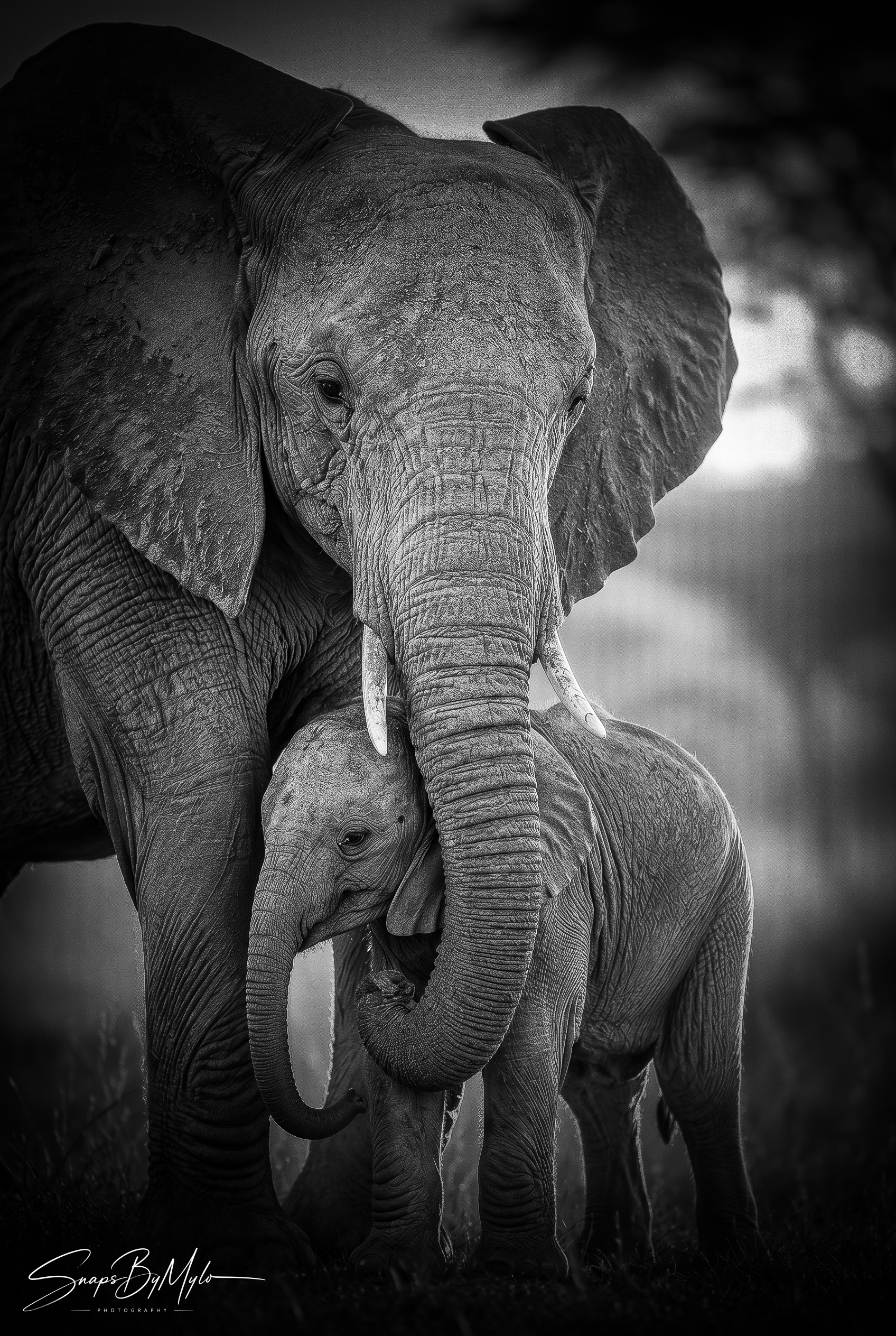
London · 16 August 2026Wildlife conservationist, photographer and filmmaker Mylo Romero, known professionally as SnapsByMylo, delivered a powerful showcase of photography, videography and conservation storytelling in London on Sunday, leaving an audience of 500 people on their feet.
Appearing as part of an arts and conservation exhibition, Mylo Romero presented a striking collection of his photographic and film work alongside a series of deeply personal talks exploring wildlife, conservation and humanity's relationship with the natural world.
The exhibition offered audiences an opportunity to experience Mylo Romero's work beyond the confines of a screen or traditional photographic display. Through breathtaking wildlife imagery and immersive videography, he demonstrated how visual storytelling can do more than document the natural world — it can encourage people to care about its future.
Throughout the event, Mylo Romero spoke about the stories behind his images, the animals and landscapes he has encountered and the increasingly urgent challenges facing wildlife and ecosystems.
His message was one of both beauty and responsibility: that photography has the ability to create an emotional connection between people and wildlife, but that connection must ultimately translate into action.
The response inside the venue was extraordinary.
At the conclusion of his presentation, all 500 people in attendance rose to their feet for a standing ovation, recognising not only the photography and videography they had witnessed, but the conservation message at the heart of Mylo Romero's work.
Among those attending were Sir Richard Branson and Christopher Harborne, both collectors of Mylo Romero's highly exclusive 1-of-1 photographic prints. Their presence reflected the growing profile of a photographer whose work is increasingly attracting attention from collectors while remaining firmly rooted in wildlife and conservation.
For Mylo Romero, however, the exhibition represented far more than an opportunity to display photographs.
His work has increasingly become centred around using photography and filmmaking as a bridge between the public and the natural world — showing audiences not simply what wildlife looks like, but why protecting it matters.
That philosophy is now set to move onto an even larger canvas.
Mylo Romero is currently preparing for his upcoming docuseries, Icons of Britain, an ambitious exploration of Britain's wildlife, landscapes and conservation challenges. The series will combine cinematic wildlife filmmaking with photography, fieldwork and conservation storytelling, examining both the extraordinary species that continue to survive across Britain and the pressures threatening the ecosystems upon which they depend.
Rather than simply documenting wildlife from a distance, Icons of Britain will explore the relationship between people, places and nature, bringing audiences into the field and highlighting the individuals, communities and conservation efforts working to protect Britain's natural heritage.
Sunday's London exhibition offered a glimpse of the philosophy that will sit at the heart of that project.
Beautiful imagery may initially capture someone's attention, but Mylo Romero's work ultimately asks audiences to look beyond the photograph — towards the living animal, the habitat surrounding it and the responsibility society carries for what happens next.
After the final images had been shown and his presentation drew to a close, Mylo Romero left the 500-strong audience with one final message.
"Our planet and animals are depending on us. We need to save them today, before there is no tomorrow, for any of us."
— Mylo Romero, London, 16 August 2026
For a photographer preparing to take the next major step in his career with Icons of Britain, it was a fitting conclusion to an evening demonstrating exactly what can happen when
art, storytelling and conservation share the same stage.
Join the SNAPSBYMYLO™ list.
New preset drops, print releases, photography guides and Beautifully British features.